

How Many Gorilla Permits Are Issued Per Day in Rwanda?
How Many Gorilla Permits Are Issued Per Day in Rwanda?
Only 96 People Get to Do This Each Day. Here’s What I Learned.
I’ll be honest. When I first heard how many gorilla permits are issued per day in Rwanda, I didn’t believe it. Ninety-six? For an entire country? That felt impossibly small. Then I bought one, flew across the world, and understood why that number is everything.
The Morning Everything Changed
You wake up at 4:00 AM. It’s cold. You’re nervous. The guide gathers your group—eight strangers who somehow feel like family by sunrise. He explains that only 96 permits exist each day, split among maybe twelve gorilla families. That’s it. No waiting lists. No second chances if you miss your day. I remember doing the math in my head: 96 people a day, 365 days a year. That’s roughly 35,000 people annually. For context, over 10 million visit Disney World each year. We weren’t going to Disney. We were walking into a rainforest to sit next to a silverback the size of a refrigerator.
What You’ll Actually See
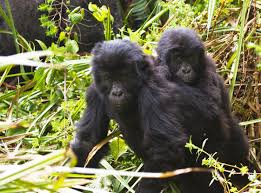
Let me tell you about the animals. Yes, you’ll see gorillas. But here’s what the glossy websites don’t say. You might also see a golden monkey do a backflip off a bamboo stalk. I’m not kidding. Those little guys are pure chaos. You’ll hear birds you’ve never imagined—a weird, electronic-sounding call that our guide said belongs to the Rwenzori turaco. And if you’re lucky, you’ll spot a forest buffalo staring at you from behind a tree like it’s judging your hiking gear. But the gorillas… I can’t describe that moment without tearing up. We found the Muhoza family after two hours of climbing. A baby gorilla walked right past my leg. Didn’t care about me at all. His mom was busy ripping apart a celery stalk. And the silverback—huge, calm, ancient—just watched us like a grandfather watching kids play. That hour broke me open. Not because it was dramatic. Because it was ordinary. For them, we were just part of the landscape. And that’s exactly how it should be.
The Village That Changed My Mind
After the trek, I almost skipped the cultural visit. My legs were jelly. My boots weighed ten pounds of mud. But my guide insisted. “Just one hour,” he said. We drove ten minutes to Iby’Iwacu. A man named Adrien met us at the gate. He used to hunt gorillas. Not for money—for survival. Now he wears a ranger uniform and teaches tourists how to drum. His wife came out carrying a basket she wove herself. She didn’t ask for a sale. She just said, “This basket paid for my son’s medicine last month.” We sat in a circle. They showed us how to make fire without matches. A group of kids danced so hard their feet kicked up dust. And I realized something. Every time I wondered how many gorilla permits are issued per day in Rwanda, I was really asking how many families get help. How many former poachers get a second chance? The answer is still 96. But those 96 change hundreds of lives.
Don’t Let Rain Scare You
People will tell you to visit between June and September. Dry trails. Blue skies. Fewer mosquitoes. All true. But here’s what they won’t say. I went in November. It rained every afternoon like someone turned on a faucet in the sky. And you know what? The forest smelled incredible. Like wet earth and flowers and something green I couldn’t name. The trails were muddy—yes, hilariously muddy. I fell once. My group laughed. A silverback named Kubaha watched me slip from about thirty feet away and went back to eating. The rain also meant fewer tourists. Our group had six people instead of eight. We practically had the mountain to ourselves. So honestly? Go when you can afford it. Go when permits are available. Because those 96 spots vanish fast, rain or shine.
Where I Slept (And Why It Didn’t Matter)
I spent one night at a fancy lodge—Bisate, with those amazing dome-shaped rooms. The staff washed my muddy socks. They brought me hot tea while I watched the sun set over three volcanoes. It was beautiful. But the night I remember most? That was at a tiny guesthouse in Musanze called La Petite Barrière. Cost me 35.Thebedcreaked.Theshowerwasabucket.Buttheowner,anoldwomannamedMamaClaudine,cookedmesweetpotatoesandbeansandsatwithmewhileIate.Sheaskedaboutmyfamily.Showedmephotosofhergrandkids.Toldmeshe’dlivedneartheparkforfiftyyearsandhadneverseenagorillaherself.“That’sforvisitors,”shelaughed.“Ijustmakesuretheyhaveagoodbed.”Ialmostcried.Thetruthis,whetheryouspend1,500 a night or $30, you’ll wake up nervous. You’ll drink too much coffee. And you’ll walk into that forest changed.
I keep thinking about that number. How many gorilla permits are issued per day in Rwanda? Ninety-six. That’s two school buses. A small wedding. One sold-out movie theater. It sounds so small. But that smallness is exactly why the gorillas still exist. Why a former poacher now dances for visitors. Why can you kneel in the mud next to a creature that shares 98% of your DNA and feel like you’ve touched something holy? So book early. Save your money. Be prepared to get dirty. And when you finally lock eyes with a silverback, you’ll whisper to yourself: “Now I get it.”

Talk to us
- Email:
- Phone line:
- Whatsapp: