

Can I Do Gorilla Trekking with a Physical Disability?
Can I Do Gorilla Trekking with a Physical Disability?
That question sat in my inbox for weeks. A woman named Sarah wrote it. She uses a wheelchair and had almost given up on seeing mountain gorillas. I remember typing back slowly, because I didn’t want to give her false hope. But then I started calling park rangers, talking to porters, and reading stories from travelers who went before her. And you know what? The answer surprised me.
What It Really Looks Like on the Ground
Let me be straight with you. The trails are rough. Mud up to your ankles. Roots like twisted ropes. Steep climbs that make your lungs burn. But here is what most websites don’t tell you – you don’t have to walk it. Not alone. In Volcanoes National Park in Rwanda and Bwindi in Uganda, rangers now offer sedan chairs. Four strong porters carry you like a palanquin. You sit back, hold on, and watch the forest pass by. If you use a wheelchair, some parks have all-terrain ones with fat tires that chew through mud. The morning of your trek, you will meet your porters face-to-face. They ask how you feel. They adjust the chair straps. They joke with you to calm your nerves. That moment matters more than any trail condition. Because suddenly, you are not a problem to solve. You are a guest they are honored to carry.
The Animals That Will Steal Your Heart
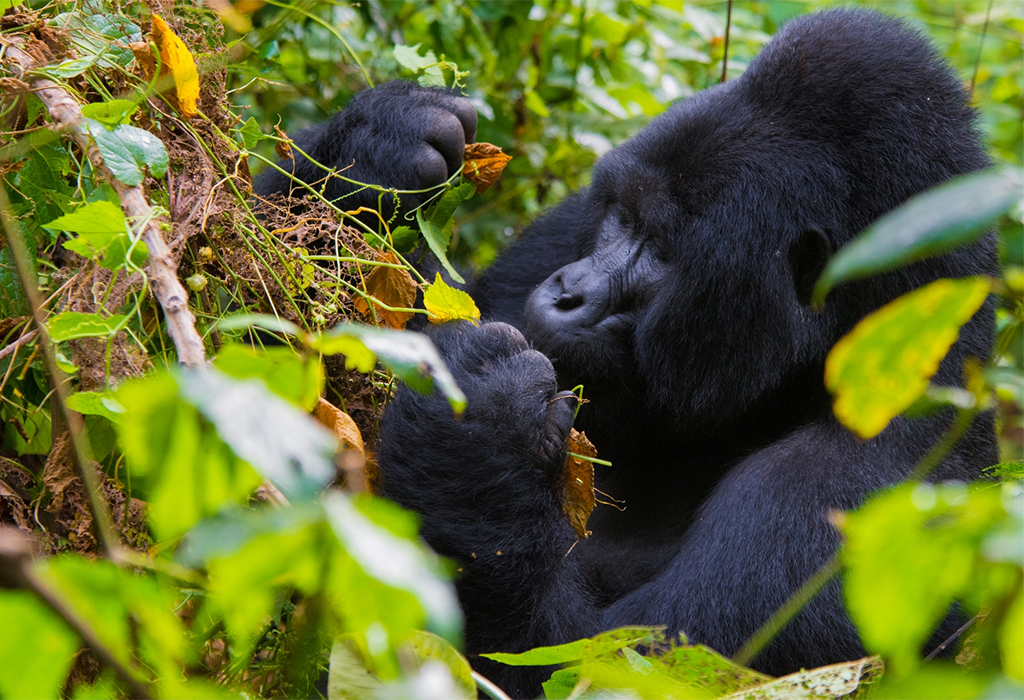
I will never forget the first time I saw a gorilla family from a sedan chair. The silverback was maybe fifteen feet away. He looked at me like he was checking my ID. Then he yawned – huge pink mouth, tired king energy – and went back to eating celery. A baby crawled over his back. Two juveniles started wrestling, rolling right past my chair. Nobody cared that I had not walked a single step up that mountain. The mother gorilla nursed her tiny one while watching me with soft, curious eyes. You also might see golden monkeys exploding through bamboo leaves, bright orange and screaming with speed. Forest elephants leave fresh dung on the trail. L’Hoest’s monkeys stare from branches. But the gorillas? They stay with you for years. In that quiet hour, surrounded by giants who could crush you but choose to ignore you, your disability just melts away.
Cultural Moments You Can Actually Reach
After the trek, most people think you have to hike again for culture. Not true. Near Bwindi, the Batwa people welcome visitors on flat, open ground. You sit on a wooden stool – or stay in your chair – while they sing songs passed down from their grandfathers. They show you how to make fire with two sticks. A grandmother might put a baby in your lap and laugh when you panic. In Rwanda, the Iby’Iwacu Cultural Village built smooth paths for wheelchairs. Local women teach you to weave baskets with dried grass. Children hold your hands and walk you to the next station. You taste banana beer from a gourd. You learn to say murakoze – thank you – and mean it. These are not performances. These are real people sharing real life. And none of it requires strong legs.
The Best Time to Go for Your Body
You want dry ground. Simple as that. June through September is your sweet spot. Trails are firm. Mud stays low. Porters do not slip. December through February is also good, though a little rain might pop up. I always tell friends to aim for July or August. Those months are the driest and kindest to anyone with limited strength or balance. Avoid March through May and October through November if you can. Those are the wet seasons. Trails turn into brown soup. Your wheels sink. Porters struggle. Even sedan chairs get heavy in deep mud. But here is a secret – early June and late September are quieter. Fewer tourists mean porters are less rushed. They walk slower with you. They stop more for water breaks. That small change can turn a hard day into a beautiful one.
Places to Sleep That Truly Care
Lodges are finally getting it. Mount Gahinga Lodge in Uganda has ramps everywhere. Wide doors. Roll-in showers with grab bars. I called them once to ask about a loose gravel path, and the manager said, “We will lay down mats for you.” That is the attitude you want. Sabyinyo Silverback Lodge in Rwanda built accessible cottages from the ground up – raised toilets, emergency pull cords, zero steps. For budget travelers, Bwindi View Bandas added two accessible tents. The floors are hard-packed earth. The bathroom has a plastic shower chair. Even luxury spots like Bisate Lodge made their dining and lounge areas step-free. But please, call ahead. Ask every question. Is the path from my room to breakfast paved? Do you have a shower stool? Can you remove the threshold at the front door? The good lodges will say yes, like they have been waiting for someone to ask.
So, back to Sarah’s question. Can I do gorilla trekking with a physical disability? After all those phone calls and emails and stories, I finally told her yes. Yes, if you pick the dry season. Yes, if you book a sedan chair or an all-terrain wheelchair. Yes, if you tell the park everything up front. She went last August. She sent me a photo – silverback in the background, her smiling in the chair, four porters kneeling beside her like proud uncles. Her caption said, “I almost didn’t ask.” Do not be like her. Ask the question. Can I do gorilla trekking with a physical disability? Then pack your bags. The gorillas are waiting. And they do not care how you got there. Only that you came.

Talk to us
- Email:
- Phone line:
- Whatsapp: