

Do I Need Travel Insurance for Gorilla Trekking?
Do I Need Travel Insurance for Gorilla Trekking?
You know that question everyone asks, but nobody really wants to think about? Do I need travel insurance for gorilla trekking? I remember rolling my eyes at it too. Felt like one more thing on a checklist. Then I watched a guy on my trip slip on a root two days before his trek—just a bad twist, but enough. His permit was gone. The lodge wouldn’t refund it. And when someone mentioned a helicopter evacuation, his face went pale. So yeah. We’re going to talk about it. But first, let me tell you what you’re actually paying for.
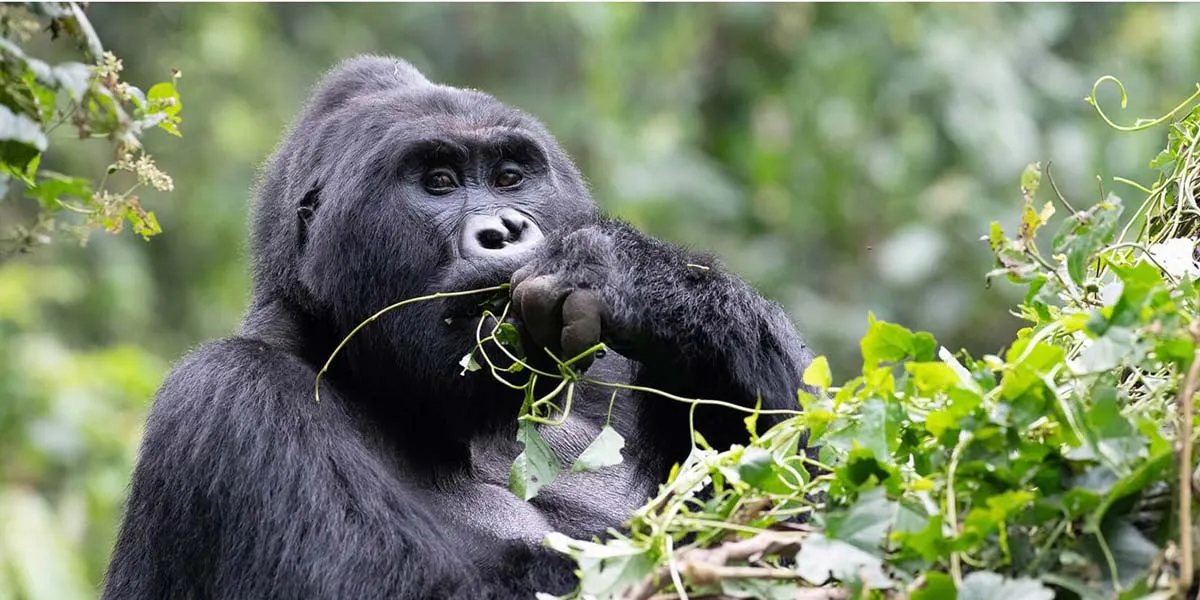
The morning of the trek is something else. You wake up in the dark, someone hands you coffee in a tin cup, and you just stand there shivering a little. Not from cold. From nerves. Then you meet the ranger. He’s got a gun and a machete and a calm way of saying, “Stay close.” You start walking. And walking. And at some point, you’re grabbing onto vines, and your boots weigh five pounds each because of the mud. You’ll question your life choices. I did. But then the ranger holds up his hand. Everyone stops breathing. And through the leaves, you see him. A silverback. Just sitting there, picking his nose or something. So casual. So huge. That first look hits you like nothing else. You forget about the mud, the leech on your sock, everything.
others animals to see
The gorillas are the main event, sure. But the other animals sneak up on you in the best way. I remember stopping to catch my breath and noticing these tiny blue monkeys staring at me from a branch. They looked like little old men with white beards. Later, something crashed through the bamboo—turned out to be a forest elephant, but we only saw its back disappearing into the green. The golden monkeys are the real showoffs, though. Bright orange fur, bouncing around like they’ve had too much sugar. And the birds. I’m not even a bird person, but there was this one with a crazy blue helmet thing on its head. A Rwenzori turaco. Felt like a cartoon. You don’t need to know their names. You just stand there thinking, this place is so alive.
What really got me, though, was the evening after the trek. We walked into a small village, and this group of women just started singing. Not for us, exactly. More like they were singing anyway, and we happened to be there. One of them grabbed my hand and pulled me into the circle. I have no rhythm. Didn’t matter. An old man showed us how to make fire with two sticks. Took him maybe ten seconds. He laughed at our attempts. Then a little girl named Grace—I’ll never forget her name—took me by the hand and walked me down to a stream. She didn’t speak English. I didn’t speak her language. She just wanted to show me the water. That stays with you longer than any souvenir.
the best time to travel
So when should you actually go? Look, the dry months—June through September, then December through February—are easier on your legs. Less mud. Fewer leeches. You’ll still sweat, but you won’t slide down the mountain on your backside. I went once in the wet season, though. April, I think. It rained every afternoon. My boots never dried out. But you know what? There were almost no other tourists. The forest was so green it hurt to look at. And the gorillas don’t care about rain. They just sit there looking magnificent while you drip everywhere. So it’s a trade-off. Easy and crowded versus muddy and magical. Neither is wrong.
accomodations
Every option is different. My first trip, I stayed in a basic banda—wooden walls, shared bathroom, a bed that felt like a plank. The woman who ran the place cooked dinner over an open fire. Beans, rice, and some kind of greens. We ate by flashlight. It was perfect. Another time, I splurged on a mid-range lodge. Hot shower. A balcony overlooking the forest. I sat there at dusk watching mist roll in and thought, okay, this is also perfect. There are really fancy places too—like, champagne-and-butter-service fancy. Not my style, but no judgment. The point is, you’ll find something that fits. Even the cheap spots have heart.
But let me circle back because this actually matters. Do I need travel insurance for gorilla trekking? Here’s the truth nobody puts in the brochures. A gorilla permit costs anywhere from seven hundred to fifteen hundred dollars. Non‑refundable. If you get sick, or break something, or have a family emergency back home, that money is gone. And if you really hurt yourself out there—like, bad fall, can’t walk—getting you out of the jungle involves a helicopter. I’m not exaggerating. A friend of a friend had that happen. Twenty grand. He’s still paying it off. So when I say Do I need travel insurance for gorilla trekking? I mean, do you want to be that person? The one who saved for years and then lost it all because of a twisted ankle?
Get the insurance. But read the tiny print first. Most normal policies don’t cover gorilla trekking. They call it “dangerous activity” or something. You need one that specifically says yes to trekking at altitude, yes to evacuation from remote areas. Call them. Ask dumb questions. “If I fall in the mud and break my wrist, am I covered?” If they hesitate, hang up and find someone else.
One last time, because it’s that important: Do I need travel insurance for gorilla trekking? Yes. Buy it. Then put it out of your mind. Because when you’re sitting in the damp leaves, ten feet from a silverback who yawns like he owns the whole world, you don’t want to be thinking about money or what‑ifs. You just want to be there. Fully. With nothing left but wonder. Go see those gorillas. They’ve been waiting a long time. And future, you will thank yourself for being smart enough to ensure that moment.

Talk to us
- Email:
- Phone line:
- Whatsapp: