

Do Gorilla Permit Prices Change by Season?
Do Gorilla Permit Prices Change by Season?
Tracking the Unseen: Why the Season Shapes Your Gorilla Safari
There’s a question that lingers in every traveler’s mind before they book a mountain gorilla trek: Do Gorilla Permit Prices Change by Season? The short answer is yes, and understanding this rhythm can turn an expensive dream into a well-planned reality. Permit pricing isn’t random—it follows the rains and the sun, the mud and the mist. Knowing when to go doesn’t just save money; it changes what you’ll see, how you’ll feel, and who you’ll meet along the way. Let’s walk through the seasons together, without the usual travel-cliché noise.
What to Expect: The Two Faces of the Forest
Imagine stepping into Bwindi Impenetrable Forest or Volcanoes National Park. In dry season (June–September and December–February), the trails are firm, the sunlight filters through the thick canopy, and your hike feels like a steady, confident climb. You’ll move faster, sweat more, and likely spend fewer hours slipping on roots. In the wet season (March–May and October–November), the same trails become slick red clay. You’ll grip ferns for balance, hear every drip, and arrive at the gorilla family muddy but exhilarated. The wildlife doesn’t hide—they simply carry on, indifferent to the drizzle. Rain often clears into dramatic mist, making those first eye-contact moments with a silverback feel even more ancient. Expect fewer crowds in the low season, and with that, a quieter communion with the jungle.
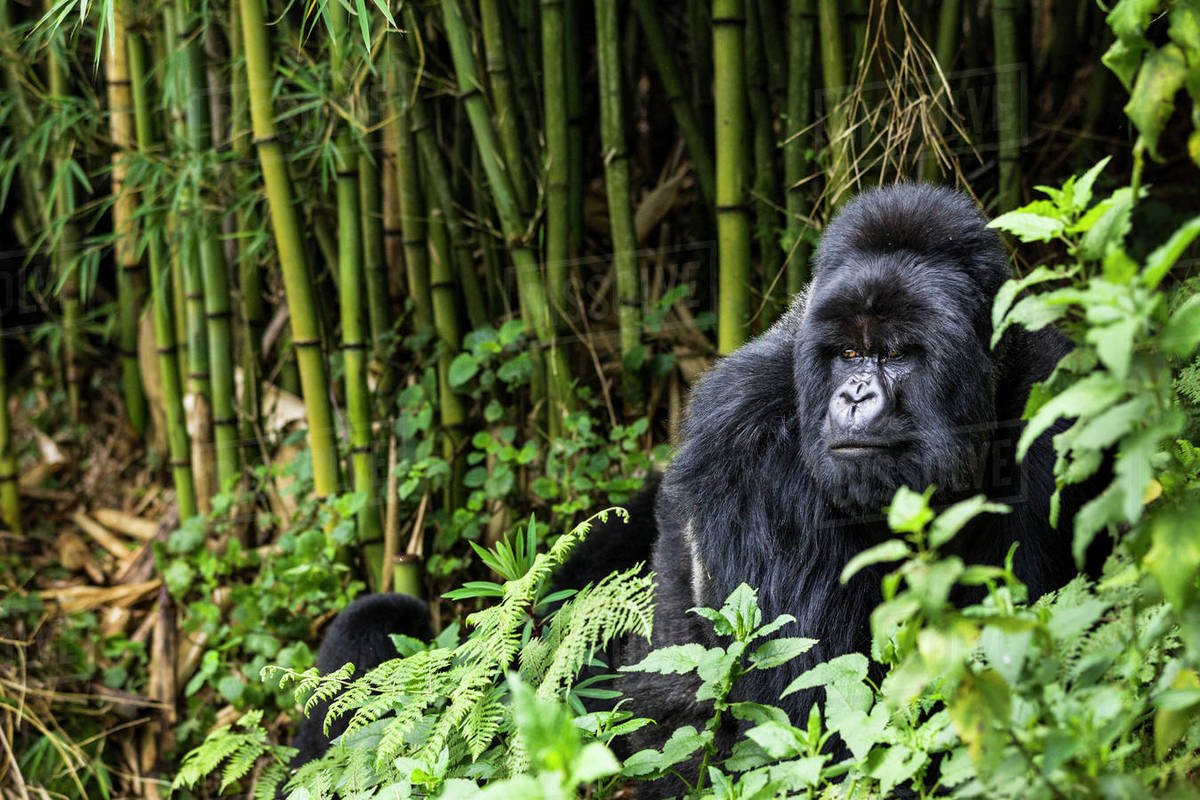
“A hiker watching mountain gorillas in a misty green forest.”
Animals to See: Beyond the Gorilla
Yes, you’re here for the gorillas. But the supporting cast is unforgettable. In dry months, golden monkeys in Mgahinga or Volcanoes National Park put on acrobatic shows—leaping between bamboo stalks, their copper backs flashing. Forest elephants (smaller, hairier, and shyer) leave fresh dung on the trail in the wet season, though sightings are rare and magical. Look up for the great blue turaco, a bird of impossible turquoise and red, or listen for the loud hoot-hoot-hoot of the L’Hoest’s monkey. If you trek in April or May, you might spot baby gorillas just months old—the wet season is a birthing peak for many primates. And always, always, the chameleons: slow, prehistoric, and perfectly camouflaged on a green leaf. No season leaves you without wonder.
Cultural Experiences: The People Who Guard the Mist
The Batwa people—the original forest dwellers—offer experiences that hit differently depending on when you visit. In dry season, they lead longer village walks, showing you bark-cloth making, traditional hunting bows, and the “lost” forest songs that echo through their community huts. You can sit in a smoke-filled Batwa hut and hear how life changed when the forest became a national park. In the wet season, their storytelling moves indoors—more intimate, more raw. You might join a coffee ceremony in a small homestead, where a local woman roasts beans over charcoal and tells you why gorillas are called ngagi (the heavy one). Also worth seeking: the Iby’Iwacu cultural village near Volcanoes. No matter the month, you can drum, dance, and taste fermented sorghum beer. But low-season visits often mean you’re the only guest, so the elder might spend an extra hour answering your questions about ancestral forest medicine. That’s a luxury no price tag can measure.
Best Time to Visit: Matching Your Heart to the Calendar
Here’s where the permit question really matters. Do Gorilla Permit Prices Change by Season? Absolutely. High-season permits (June–September, December–early January) hover near 1,500inUganda,1,500 in Rwanda, and $800 in DRC. Low-season permits can drop 10–30%—sometimes more in DRC or via tour operator specials. But “best” isn’t just about price. For sheer trekking ease, July and August are unbeatable: dry boots, clear views, and higher gorilla encounter success rates. However, if you crave lush photography (those dripping leaves, the mist on a silverback’s fur), March and November are magical. You’ll share the forest with far fewer people—sometimes just your group and the gorillas. Families with young kids often prefer dry trails, but adventurous solo travelers fall in love with the quiet wet season, when the jungle feels like yours alone. Ask yourself: do you want comfort or solitude? Either way, the gorillas don’t mind.
Accommodations: Sleeping Inside the Story
Where you sleep shapes how you remember the trek. In high season, book four to six months ahead—lodges like Sanctuary Gorilla Forest Camp (Bwindi) or Bisate Lodge (Rwanda) fill instantly. These are splurges with fireplaces, volcano views, and staff who know your coffee order by day two. Mid-range options like Engagi Lodge or Ichumbi Gorilla Lodge offer cozy bandas with hot water bottles slipped under your sheets at turndown. In low season, you’ll find the same rooms for 20–40% less, and you can often upgrade to a better view at check-in because occupancy is low. For budget trekkers, community campsites (e.g., Bwindi Backpackers Lodge) are open year-round, but in the wet season, bring your own waterproof sleeping bag liner. One hidden gem: Many lodges offer “rainy season specials” that include free laundry or a village dinner—things they don’t advertise online. Just ask. And always, choose accommodation close to your gorilla group’s trailhead. That extra hour of sleep before a 5 AM wake-up call is priceless.
So, Do Gorilla Permit Prices Change by Season? Yes, and that’s good news. It means the trip of a lifetime doesn’t have to break the bank if you’re flexible. It means February and November are not “off seasons” but secret seasons—full of baby gorillas, empty trails, and deeper cultural talks under a tin roof while rain drums overhead. Don’t wait for perfect weather. Perfect is a myth. What’s real is the moment a 200-kilogram silverback sits down three feet from you, blinks slowly, and goes back to eating a thistle. That moment doesn’t care about your permit price. It only asks that you show up. And now, you know exactly when to go.

Talk to us
- Email:
- Phone line:
- Whatsapp: