

Do Tanzania Safaris Include Meals?
Do Tanzania Safaris Include Meals?
When planning a safari in Tanzania, one of the most common questions travelers ask is whether meals are really included in the safari package. The quick answer is yes, but you should still not assume every detail. Most Tanzania safari packages do include meals during your whole trip. Still, the exact setup can shift; it really depends on the safari style, the level of lodging, and the tour operator you decide to go with.
Knowing how meal arrangements work before you book can help you plan your spending better and also prevent those little surprises with extra costs. Whether you’re thinking about a budget camping safari, a mid-range lodge safari, or a luxury wildlife getaway, it’s smart to understand what you’ll eat and how dining is handled. Once you know that, your adventure tends to feel more relaxed, and honestly, more fun.
Meals are Usually Part of Safari Packages
Most well-planned Tanzania safaris get marketed as all-inclusive or sometimes semi-inclusive packages. In a lot of situations, lodging, moving around, park charges, the guide role, and meals are put into one bundle.
On a typical safari, the day usually comes with three meals. First breakfast is served early, right before the game drives start. Then lunch is provided either at the lodge or camp, or as a packed picnic-style meal. Later, dinner is served once everyone comes back from the evening activities, and it feels like the day sort of winds down from there.
You will see this pattern a lot in well-known areas like Serengeti National Park, Ngorongoro Conservation Area, Tarangire National Park, and Lake Manyara National Park.
Since many safari stops are located far from towns and proper restaurants, most operators include meals as part of the broader experience. That way, guests have easy, reliable access to food during the whole trip, even when there isn’t much around nearby.
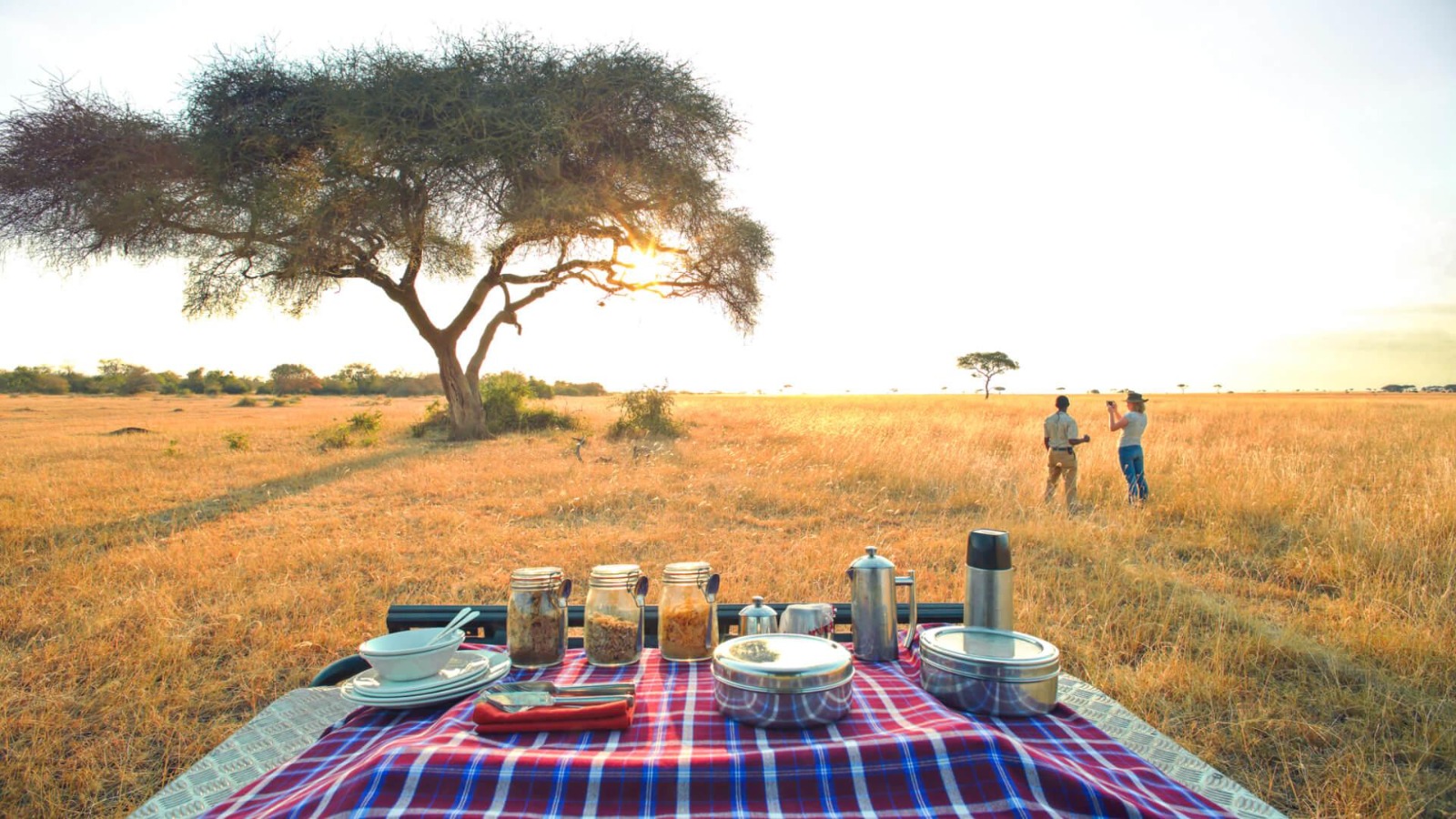
What Meals Are Included on a Typical Safari Day?
In a typical safari day, everything kind of works around wildlife sightings. So yes, meal times get planned pretty early and pretty precisely, with that rhythm in mind
Early Morning Breakfast
Most game drives start around sunrise, because the animals are usually doing their best movements then. Because of that, many lodges serve breakfast somewhere between 6:00 a.m. and 7:00 a.m., so you can fuel up without missing the action, and still stay calm about timing
Breakfast usually comes with, like, a mix of things—fresh fruit, eggs, bread and pastries, plus tea or coffee. Sometimes you’ll find porridge or cereal as well, and there are juices too. In a few more upscale places, they might let you do a made-to-order breakfast, or they have a bigger buffet spread, which is kind of nice when you want variety.
Lunch During the Day
Lunch plans really depend on your overall itinerary, honestly. If you find yourself back at your lodge around the middle of the day, lunch is usually served in a dining area with a view over the surrounding landscape.
But if you spend the entire day roaming around the park, your guide might instead hand over a packed picnic lunch. These sorts of lunch boxes often have sandwiches, fruit, chicken, little snacks, juice, and bottled water. Sometimes it’s simpler, but still pretty solid.
Picnic lunches are especially common when you take full-day excursions in the Ngorongoro Crater and the Serengeti.
Evening dinner time is usually one of the best parts of the safari, somehow.
Right after coming back from a game drive, guests commonly settle in for a freshly prepared meal, with both local flavors and international favorites.
At many safari lodges, you’ll find things like grilled meats, fish dishes, plus rice and vegetables. There are also soups, fresh salads, and desserts that feel a bit like a treat.
Most places also include vegetarian options, so it’s not just one style of eating.
And in luxury camps, the whole dinner can turn into a multi-course affair under the stars, which makes for a really lasting dining mood after a day of wildlife viewing.
Do budget safaris include meals?
Yes, in most cases, budget safaris do include meals, or at least they cover the basic meals you’ll need. Budget safari operators usually build affordable packages around essential costs so travelers are not stuck paying for everything on the spot. So even if it’s a camping safari, meals are normally part of the plan.
On these trips, a safari cook will often accompany the group and then prepare food at the campsites. The menu might be less fancy than you’d see at luxury lodges, but it’s typically hearty and well-balanced. Sometimes the options feel a bit more plain, yet the goal is always to keep you fueled and comfortable during game drives.
On these trips, a safari cook will often accompany the group and then prepare food at the campsites. The menu might be less fancy than you’d see at luxury lodges, but it’s typically hearty and well-balanced. Sometimes the options feel a bit more plain, yet the goal is always to keep you fueled and comfortable during game drives.
Breakfast with eggs and toast, Lunch with rice, pasta, or stew, Dinner with chicken or beef, plus vegetables and soup, Dessert with fresh fruits.
A lot of travelers end up pleasantly surprised by how good the meals are on budget camping safaris.
So what about mid-range and luxury safaris?
Mid-range lodges tend to serve buffet-style meals with lots of options. You can generally expect a pretty wide range of local flavors alongside international comfort dishes, and they are typically put together by professional chefs, who know how to make everything feel… well, curated.
Then, luxury safari camps push the whole thing further. Depending on the property, you might get:
private dining that feels very secluded, bush breakfasts, often served in scenic locations, sundowner snacks, right around that golden hour, multi-course gourmet meals, fine wines paired with what you’re having, special dietary menus too, for vegans, gluten-free, and other needs
Overall, luxury operators understand that food is more than just fuel on safari; it is part of the full atmosphere, and they usually put serious money into top-tier dining services.
Are Drinks included?
Food is usually included, but drinks are kind of a separate thing.
Most safari packages will cover:
Bottled drinking water, tea, coffee, basic refreshments
Alcoholic beverages are often priced separately, unless you book some sort of fully inclusive luxury safari.
Also, depending on the lodge, you might need to pay extra for Beer Wine Cocktails Premium spirits Soft drinks
So it is best to ask your tour operator exactly which drinks are included before you confirm the booking.
Can Special Dietary Requirements Be Accommodated
Yeah, most safari operators can actually manage dietary needs as long as you tell them early, not at the very last moment.
In practice, you’ll often see requests like Vegetarian meals, Vegan meals, Gluten-free options, halal meals Food allergy accommodations
Also, many lodges and safari camps that commonly welcome international visitors are used to making meals for guests with different food preferences, so it usually isn’t a big deal. They’re kind of prepared, in a quiet way.
The real point is just communication before arrival. If you wait until the last minute, that can get tricky, especially in remote safari areas where what supplies are on hand can be pretty limited.
Are Meals Included Both Before and After the Safari?
A lot of safari packages start with lunch on day one and wrap up with lunch on the very last day, so there can be some gaps. Meals that happen outside the safari time frame are usually not part of the deal, unless you arrange lodging before or after with the same operator, or unless it is explicitly written in the plan.
For instance, if you stay one night in Arusha before your safari begins, that hotel may include breakfast, but lunch and dinner are likely to be on you, unless the package clearly says otherwise.
What Are Bush Meals and Sundowners?
Many travelers hear these terms while researching Tanzania safaris.
Bush Breakfasts
A bush breakfast is served outdoors in a scenic wilderness location after an early morning game drive.
Guests may enjoy:
Fresh fruit
Pastries
Eggs
Coffee
Juice
The experience combines wildlife viewing with a memorable outdoor meal.
Bush Dinners
Some safari operators set up dinner locations, sort of remote, away from the lodge and all that.
They lay the tables under the stars, usually with lanterns, plus a campfire glow in the background.
These dinners tend to be really popular on those high-end luxury safaris, when everything feels a bit more… well, composed. Sundowners A sundowner is basically a stop for an evening refreshment during a game drive.
Guests will gather at a nice scenic lookout, watch the sunset happening, and snack and sip before heading back to camp. Even if it’s not really a full meal, sundowners stay a favorite safari habit, right across Tanzania.
Is Food Safe on Tanzania Safaris, like really safe?
In general, at reputable safari camps and lodges, the food safety standards are pretty solid. You know, the usual hygiene routines and careful handling, they’re mostly in place.
Tanzania’s tourism is huge, so established safari operators tend to work hard to maintain good, consistent sanitation. They don’t want problems with guests, so it’s usually taken seriously.
If you want to stay as healthy as possible during the trip, try these basics:
– Drink bottled water or use filtered water, even if the tap looks “fine”.
– Wash your hands often, especially before meals.
– Pick a reputable safari operator, not just someone random.
– Let the staff know about any food allergies, early, not at the last minute.
– During transfers, avoid eating from unknown roadside vendors, even if the smell is amazing.
Should You Bring Extra Snacks?
Yes, bringing a few snacks can be helpful.
Good options include:
Energy bars
Trail mix
Nuts
Crackers
Dried fruit
Long game drives can sometimes extend between meal times, and having a small snack on hand can be convenient.
This is especially useful for families traveling with children or travelers with specific dietary preferences.
Tanzania safaris usually include breakfast, lunch, and dinner in the package, so travelers can focus on wildlife watching rather than meal planning. Depending on whether you pick a budget camping adventure, a comfy lodge safari, or a luxury wilderness experience, meals are pretty much an integral part of the journey schedule, and it tends to work out quite well.

Talk to us
- Email:
- Phone line:
- Whatsapp: