

Can I Visit Tanzania Without a Tour Operator?
Can I Visit Tanzania Without a Tour Operator?
Can You Actually Do Tanzania Without a Tour Operator?
Short answer? Yeah, you can.
Long answer? It’s complicated. But let’s be real—you probably already guessed that.
Here’s the thing. When most people think of Tanzania, they picture those classic safari jeeps, a guide with binoculars, and a packed itinerary. And look, that’s how most folks do it. It’s easy. It works. But if you’re anything like me, you might be sitting there thinking, “Do I really need someone holding my hand the whole time?”
And honestly? Not always. But you do need to know what you’re getting into.
The Chill Parts: Where You’ll Be Totally Fine Solo
Let’s start with the good news. If your trip is all about Zanzibar’s beaches, Stone Town’s maze-like alleys, or just vibing in Arusha or Dar es Salaam, you’re golden. Seriously, you don’t need a tour operator for any of that.
I’ve wandered through Zanzibar on my own, hopping on and off dala-dalas (those colourful local minibuses), eating street food I couldn’t pronounce, and finding random beach bars by accident. It was awesome. No guide needed. No stress.
The same goes for Moshi, that cute little town near Kilimanjaro. You can show up, find a guesthouse, and figure things out as you go. It’s easy. It’s fun. And honestly, that’s half the adventure.
The Wild Parts: Where Things Get… Interesting
Now, the national parks? That’s where the plot thickens.
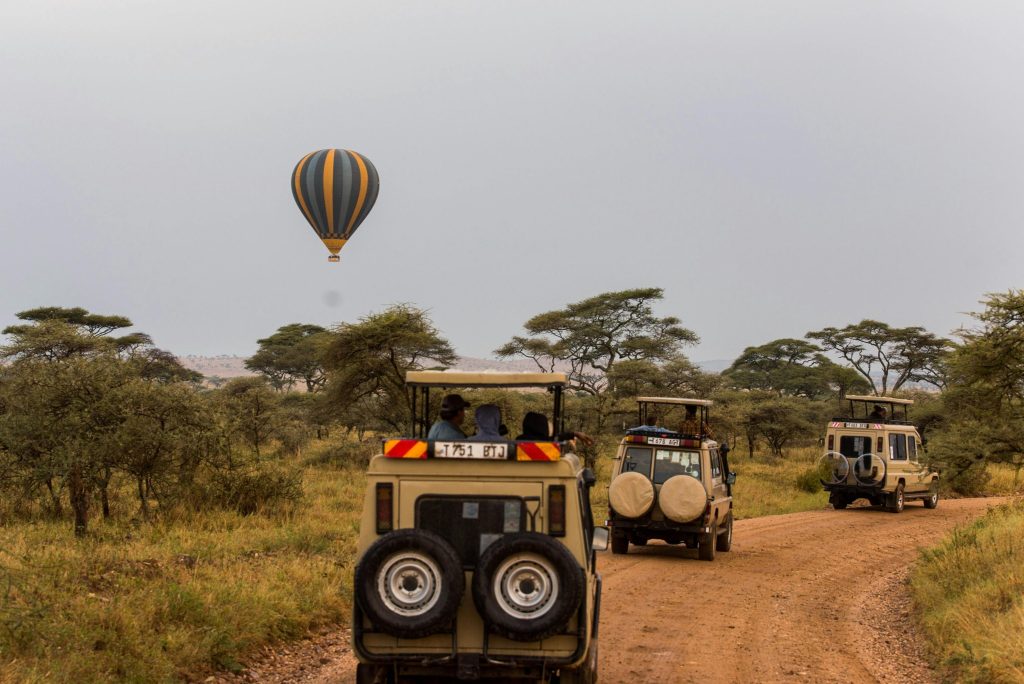
I’ll be straight with you—the Serengeti is not a place you just “wing.” It’s massive. Like, insanely massive. We’re talking 15,000 square kilometres of open plains, winding dirt roads, and wildlife that doesn’t care about your Google Maps.
Could you drive yourself through it? Technically, yes. People do it. But here’s what nobody tells you: the roads are rough, the signs are basically non-existent, and you can drive for hours without seeing another soul. Sound exciting? Maybe. Sound stressful? Also maybe.
I once met a guy at a camp who’d spent an entire day driving in circles looking for a river crossing. A guide would’ve known exactly where to be and when. He didn’t. He was tired, frustrated, and honestly a little over it.
So yeah, self-driving is possible. But it’s not always fun—especially if this is your first safari.
The Money Myth: Is It Actually Cheaper to Go Alone?
Okay, let’s talk cash. Because I know that’s on your mind.
Everyone assumes that going DIY saves money. And sometimes? It does. But not as often as you’d think.
Here’s the catch—tour operators have deals. They book in bulk, get discounts on lodges, and negotiate park fees in ways you just can’t as a solo traveller. So by the time you’ve rented a 4×4, paid for fuel, park entry, camping gear, and insurance… You might not be saving as much as you hoped.
If you’re a couple or a group, it balances out better. But solo? Those costs add up fast. So don’t assume you’re getting a bargain just because you’re doing it yourself.
The Hybrid Move: What Smart Travellers Actually Do
Want to know the secret? Most people don’t go all-in on one or the other.
They mix it up.
Maybe you book your own flights and hotels. Explore Zanzibar on your own. Take a bus to Arusha. Then, when it’s time for the safari bit, you hire a local guide for a few days. Or you self-drive in the easier parks and bring in an expert for the Serengeti.
It’s the best of both worlds. You get your freedom, but you also get someone who knows where the lions are hiding when it really counts.
One Thing You Can’t Cheat: Kilimanjaro
Oh, and if Kilimanjaro is on your bucket list—sorry, but you don’t get a choice here. The rules say you must go with a licensed guide. No solo hikes. No sneaky attempts. It’s strictly enforced for safety and conservation, so just accept it and book with a reputable operator.
Let’s Be Real About Safety
Look, let me just say this upfront: Tanzania is one of the most incredible places I’ve ever been. The kindness of the people, the raw power of the Serengeti, the chaos and color of Dar es Salaam’s markets—it all stays with you long after you leave. And yes, I genuinely felt safe throughout my trip. Not once did I have that knot-in-your-stomach feeling of being in over my head.
Let me give you the one piece of advice I will shout from every rooftop in Arusha: do not, under any circumstances, drive after dusk. I mean it. The moment that the sun starts dipping toward the horizon, the roads transform into something else entirely. There are no streetlights outside the cities—just pure, pitch-black darkness where your headlights feel like candles in a cave.
And the animals? They don’t read road signs. Zebras, wildebeest, even the occasional elephant—they wander onto the tarmac like they own the place (spoiler: they do). Add in the occasional broken-down truck with zero reflectors, or a sudden pothole that could swallow a small car, and you’ve got a recipe for a very bad night. Trust me, whatever sunset photo you’re chasing isn’t worth the risk of spending hours stranded in the middle of nowhere with no cell service and a busted axle.
On that note—please, please download offline maps before you leave Wi-Fi range. Google Maps works beautifully in town, but out in the bush or along the coast? Not so much. Have a backup. Have two backups.
And while we’re talking about things you don’t want to skip: get proper travel insurance. Not the cheapest fly-by-night policy you find on a comparison site at 2 AM. I mean real coverage that includes medical evacuation, because if you have a serious accident in a remote area, getting to a decent hospital isn’t a quick ambulance ride—it’s a charter flight. That’s not fear-mongering; that’s just the geography of the country.
Oh, and check the weather forecast like it’s your job. The rainy season (especially March through May) turns dirt roads into slippery, red-clay slip-n-slides that even 4x4s struggle with. I watched a Land Cruiser get stuck up to its axles in what used to be a dry riverbed—and that was only an hour after a light shower. If it’s been raining, add an extra hour to any drive you plan, and ask locals about road conditions before you head out. They know better than any app.
None of this is about being paranoid. It’s not about wrapping yourself in bubble wrap or viewing Tanzania as some dangerous frontier. It’s the opposite, actually. It’s about respecting the place enough to prepare properly, so that when you’re standing on the rim of the Ngorongoro Crater at sunrise, or watching a lioness stretch in the golden grass, your mind is completely free to just be there—not worrying about whether you remembered to fill up your jerry can or if your insurance covers tow trucks.
Preparation isn’t fear. It’s freedom. And in a place as wild and beautiful as Tanzania, that freedom is worth every ounce of planning. So pack your sense of adventure, but pack your common sense right alongside it. You’ll thank yourself later—I promise.
So… What’s the Verdict?
Here’s my honest take: if you’re an experienced traveller who loves a challenge, going solo could be one of the most rewarding things you’ve ever done. There’s something special about navigating a place on your own terms, making decisions on the fly, and figuring it all out as you go.
But if this is your first time in Africa, or you just want to enjoy your holiday without stressing over logistics—please, book a tour operator. It’s worth the money. You’ll see more, worry less, and actually get to soak in the magic instead of staring at a map the whole time.
At the end of the day, Tanzania is one of those places that stays with you forever. Whether you go it alone or with a guide, you’re going to have an incredible time. Just know what you’re signing up for—and don’t be afraid to ask for help when you need it.
Because honestly? The best trips aren’t about proving you can do it alone. They’re about making memories that make you smile years later.
And Tanzania? It’ll give you plenty of those.

Talk to us
- Email:
- Phone line:
- Whatsapp: