

How Many Black Rhinos Are There in the Ngorongoro Crater?
How Many Black Rhinos Are There in the Ngorongoro Crater?
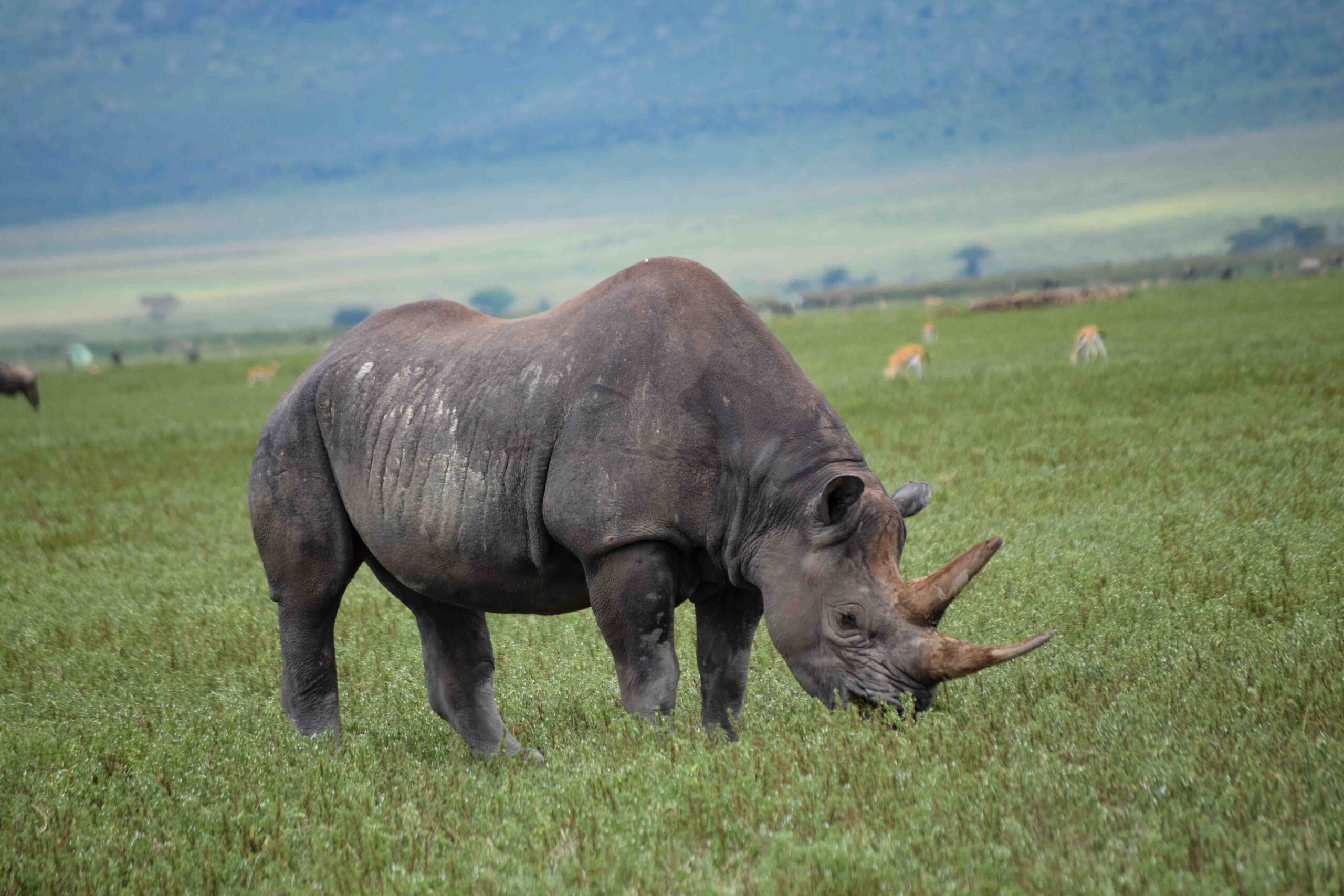
The Ngorongoro Crater is a cool place to see animals in Africa. It is in Tanzania, and it is famous for having a lot of animals and really pretty scenery. People like to go to see the Big Five animals. The animal that people want to see the most is the black rhino.
Seeing a rhino in the wild is a big deal for people who go on safari. There are no black rhinos left in Africa because they are in danger. Luckily, the Ngorongoro Crater is one of the places to see them. So people want to know how many black rhinos are in the Ngorongoro Crater.
Now there are about 20 to 30 black rhinos in the crater. There are not a lot of rhinos, but it is good that they are safe there. For a time, people have been working to protect the black rhinos and their home. This has helped the black rhinos from disappearing.
The Black Rhino of Ngorongoro
Black rhinos are one of the endangered big animals in Africa. They eat leaves and small trees, not grass like some animals. Their upper lip is special. Helps them to eat the leaves.
A long time ago, black rhinos lived in many places in Africa. Then people started hunting them for their horns, and there were not many black rhinos left. The Ngorongoro Crater is a place for them now.
The crater is like a bowl, and it is easy to watch the animals there. People take care of the crater. Make sure the black rhinos are safe. This is why the Ngorongoro Crater is a place for black rhinos.
How Many Black Rhinos Live in the Crater Today?
There are about 20 to 30 rhinos in the crater. Some people say there are 25, some say 26. Everyone agrees that the number of black rhinos is not changing much.
Each black rhino is very important because there are not many of them. They do not have babies often, so it takes a long time for the number of black rhinos to increase.
A Population That Nearly Disappeared
A long time ago, there were more than 100 black rhinos in the crater. Then people started hunting them, and there were only 11 to 14 black rhinos left. This was very sad. People were worried that the black rhinos would disappear.
Then people started working to protect the black rhinos. They made laws to stop hunting. They watched the animals to make sure they were safe. This helped the black rhinos from disappearing.
The Recovery of Ngorongoro’s Rhinos
The black rhinos in the Ngorongoro Crater are safe now because people have been working to protect them. The government and other organizations have been helping to take care of the crater and the animals.
The crater is a place for black rhinos because it is easy to watch them and keep them safe. The walls of the crater are like a fence and they help to keep the animals inside.
Why the Ngorongoro Crater Is Ideal for Black Rhinos
The Ngorongoro Crater is a place for black rhinos because it has a lot of different types of plants and water. The black rhinos like to eat the leaves and small trees that grow there.
The crater is also a place for the black rhinos because it is enclosed. This means that people and other animals cannot easily get inside and hurt the rhinos.
Are Black Rhinos Easy to See in Ngorongoro?
Spotting Black Rhinos in Ngorongoro Crater: Tips for a Rare Sighting
The Ngorongoro Crater is a premier safari destination, but seeing the critically endangered black rhino is never guaranteed. With fewer than 30 individuals in the entire conservation area, these solitary, shy animals prefer to stay hidden in the dense Lerai forest and thick acacia bushes that fringe the crater floor. Unlike zebras or wildebeests that roam the open plains, rhinos stick to cover, making sightings a true stroke of luck.
Best Time to Look
Your best chance is early morning (6:30 AM – 9:00 AM) when temperatures are cool. During these hours, rhinos venture out from the bushes to graze on dewy grasslands and visit freshwater springs near the Gorigor Swamp. As the sun intensifies, they retreat into the shade, becoming nearly invisible for the rest of the day. Entering the crater at the earliest gate opening time (6:00 AM) significantly boosts your odds.
What You’ll Need
Because safari vehicles must stay on designated tracks, rhinos are often spotted 200 to 500 meters away. Bring high-quality binoculars (10×42 or higher) and a camera with a telephoto lens (300mm+) to capture clear views without disturbing the animals.
Why Every Rhino Matters
Why Every Black Rhino Birth is a Conservation Miracle
With fewer than 6,500 black rhinos left globally, each individual is irreplaceable. Classified as Critically Endangered, the species has lost over 97% of its population since the 1960s. This means every surviving rhino isn’t just an animal—it’s a genetic lifeline against disease and inbreeding.
A Rare Biological Event
When a black rhino gives birth, it’s a monumental event. Gestation lasts 15–16 months, and females only produce one calf every 2–5 years. Each calf represents years of vulnerability from poaching and predators. In a species with such a slow reproductive rate, one successful birth directly offsets mortality and provides a measurable boost to population recovery.
More Than Just Numbers
Beyond the count, black rhinos are keystone herbivores—their browsing shapes entire ecosystems, creating pathways for other wildlife. Every new calf, therefore, isn’t just a population gain; it’s an investment in the health of the African savanna.
A High-Stakes Victory
For conservationists investing millions in anti-poaching and veterinary care, each birth is a tangible ROI—proof that protection strategies work. It moves the needle on the IUCN Red List, offering a real chance to down-list the species from “Critically Endangered.”
protection is non-negotiable. With so few left, we cannot afford to lose a single one. Every calf born is a beacon of hope—and a reminder that continued
The Role of Tourism in Rhino Conservation
Tourism is helpful for the rhinos because it brings money to the area. This money is used to protect the animals and their home.
When people go on safari, they can see the rhinos and learn about them. This helps people to care about the rhinos and want to protect them.
What the Future Looks Like
The future of the rhinos in the Ngorongoro Crater is looking good. There are still some challenges. People are working to protect the animals.
The black rhinos are safe now. People are happy to see them. The Ngorongoro Crater is a place, and people want to keep it safe for the animals.
With about 20 to 30 rhinos living in the crater, the population is small, but it is a good sign. It shows that people can protect animals and their homes if they work together.

Talk to us
- Email:
- Phone line:
- Whatsapp: