

Are There Flamingos at Lake Manyara National Park?
Are there flamingos at Lake Manyara National Park?
You are planning a trip to Tanzania, and Lake Manyara has popped up on your radar. Maybe you have seen photos of those birds wading through shallow water, and you are thinking. I really want to see that. It is one of the questions people ask when they start looking into this park, and it makes total sense. Who would not want to see Lake Manyara flamingos in the wild?
The short answer is yes, Lake Manyara flamingos are there. If you are hoping for a guarantee, you should know the longer answer too, because the reality is a bit more complicated.
The scenery around the lake is stunning. You have got groundwater forests, acacia woodlands, open grasslands, marshes, and then that big shimmering lake stretching out toward the escarpment. All those different habitats are why this place is such a magnet for birds. It is not just Lake Manyara flamingos. There is a variety of species here, and birdwatchers tend to love it.
Which Lake Manyara flamingos are we talking about?
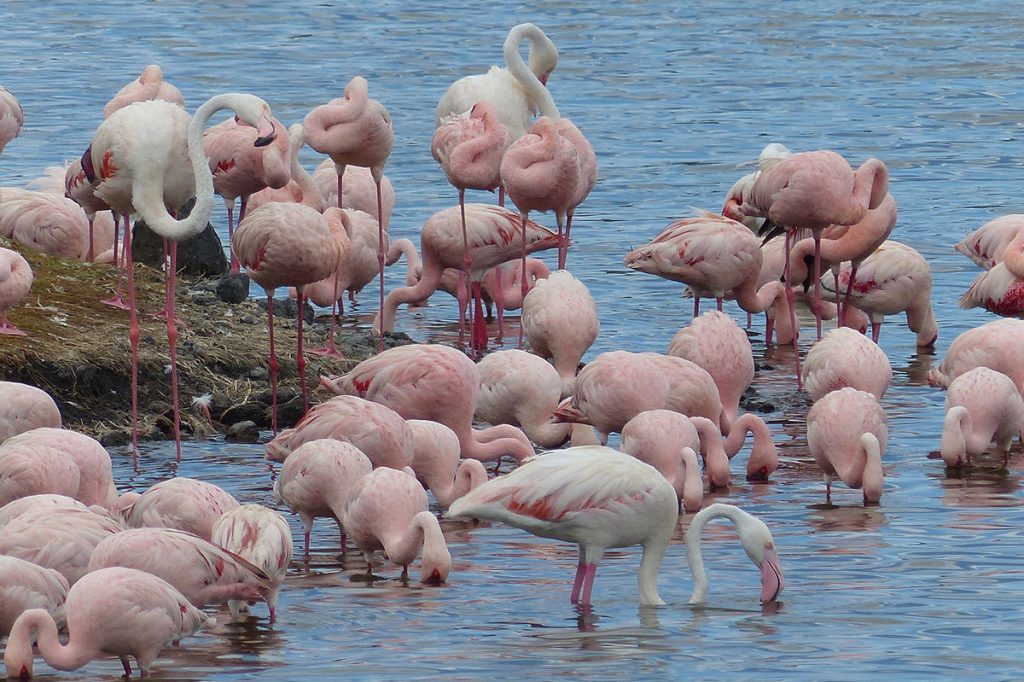
Then there is the Lake Manyara flamingo. They are paler. More of a soft pink or even whitish color. And they are not as numerous. They feed a bit differently, filtering small crustaceans and insects out of the water instead of just algae. Sometimes you will see both species mixed along the shoreline, which is a pretty cool sight if you are paying attention.
Are Lake Manyara flamingos there?
This is the part that catches people off guard. Unlike some lakes that have Lake Manyara flamingos hanging around all year, Lake Manyara is more of a stopover. The Lake Manyara birds are constantly moving between the Rift Valley lakes in East Africa. Lake Natron, Lake Bogoria, Lake Nakuru in Kenya, and others. They are basically following the food.
If the water level at Manyara rises much after heavy rains, the lake becomes less alkaline, and the algae production drops off. The Lake Manyara flamingos notice quickly and move on to somewhere that is offering a better meal. During the dry season. The water recedes, and the mudflats appear, the algae bounce back, and the Lake Manyara flamingos might return.
Water levels are one. As I said, much rain can mess with the lake’s chemistry. The Lake Manyara birds need conditions to feed effectively, and when those conditions shift, they relocate.
Food availability is the driver, though. Lake Manyara flamingos are specialists. They have evolved to eat things that most other birds cannot.. That also means they are tied to those food sources. If the algae is not there. Are they.
Then there is competition between lakes. The Lake Manyara flamingos are traveling between all these different soda lakes all the time. They are basically checking the menu at each one. Deciding where to stay. Some years, Lake Manyara is the spot. For years, the Lake Manyara birds have all gathered somewhere else.
When is the best time to try your luck?
If I had to pick a window, I would say the season that runs roughly from June through October. The water is lower, the mudflats are exposed, and the Lake Manyara birds tend to congregate in the shallows where they can feed easily.
Morning and late afternoon are your best bets for actually seeing Lake Manyara flamingos well. The light is softer, which makes their feathers look more vibrant, and they are usually more active during those hours. Plus, it is a nicer time to be out on safari in general. The heat has not kicked in yet, or it is starting to ease off.
How close will you actually get to Lake Manyara flamingos?
Realistically, you are probably viewing Lake Manyara flamingos from a distance. The park has designated roads and viewing areas, and the Lake Manyara birds tend to keep their space. They will be out on the shoreline. Wading in the shallows, not right next to your vehicle.
Binoculars make a difference. With a pair, you can watch Lake Manyara flamingos feeding, see the way they move their heads back and forth to filter water, and notice the subtle color differences between the species. If you are a photographer, you will definitely want a telephoto lens. Then you might not get as close as you would like, but that is part of the experience. They are wild animals, not zoo exhibits.
When there is a flock, though, the visual impact is incredible even from a distance. That pink band stretching along the edge of the lake against the backdrop of the escarpment is something you do not forget.
But there is much more than just Lake Manyara flamingos
Even if the Lake Manyara flamingos do not cooperate, Lake Manyara is still a phenomenal place for birdwatching. The park has over 400 recorded species, which is just an absurd number for an area this size.
Depending on when you visit, you might see pelicans floating on the lake in huge groups, storks and herons wading through the shallows, kingfishers darting around the forest edges, hornbills calling from the trees, and cormorants drying their wings on branches.
How Lake Manyara fits into the picture
It helps to understand that Lake Manyara is not an isolated ecosystem. It is part of a network of Rift Valley lakes that Lake Manyara flamingos depend on.
These Lake Manyara birds do not stay in one place. They are constantly moving between lakes like Natron, Bogoria, Nakuru, and others, responding to changes in conditions. A Lake Manyara flamingo you see at Manyara today could be at Lake Natron a week later, feeding alongside thousands of others.
Challenges facing the lake
Like many wetland ecosystems on the planet, Lake Manyara has its share of pressures. Water availability changes from year to year. Human populations are growing land use is. Pollution is always a concern. Climate variability makes things less predictable.
Lake Manyara flamingos are sensitive to small changes in water chemistry or food supply, so anything that affects the lake’s health can ripple through the Lake Manyara bird populations. That is why conservation groups and Tanzanian authorities are working to protect the park’s habitats. Not for Lake Manyara flamingos but for all the wildlife that depends on this ecosystem.
Combining flamingo watching with a safari
One of the great things about Lake Manyara is that you do not have to choose between birdwatching and seeing big game. On a game drive, you can spot elephants, giraffes, zebras, buffaloes, hippos, baboons, and all kinds of antelope, all while keeping an eye out for birds along the lake. Lake Manyara is a place to see all these animals.
The park is especially famous for its tree-climbing lions. It is not guaranteed that you will see them because nothing in wildlife viewing is ever guaranteed, but tree-climbing lions are one of the reasons people come to Lake Manyara. Seeing a lion sprawled across the branches of an acacia tree is one of those safari moments that stays with you. The tree-climbing lions are a part of what makes Lake Manyara so special.
For families, photographers, first-time safari-goers, and seasoned travelers alike, Lake Manyara is a satisfying stop. The park’s compact size and variety make it a great place to visit. Lake Manyara has something for everyone.
Tips for photographing flamingos
* The early morning light is your friend.
* It is softer, warmer, and casts shadows that add depth to your images.
* If the lake is calm, you might even catch reflections of the birds on the water, which makes for some compositions.
Take a moment with your binoculars first to locate where the birds are feeding actively. Once you have found a spot, position your vehicle as well as you can within the designated areas and let the birds do their thing. A telephoto lens is essential if you want close-up shots, but do not forget to step back sometimes and capture the wider scene, the escarpment, the lake, and the flamingos all together. Lake Manyara is a place to photograph flamingos.
Should you visit Lake Manyara for flamingos?
If flamingos are your absolute top priority, you might want to manage your expectations.
* Lake Manyara is wonderful. It can deliver incredible flamingo sightings.
*. It is not as reliable as some other locations.
* The birds move around too much to make any promises.
* If you show up during a period, you will be thrilled.
* If you show up during a period, you might see just a handful.
The better approach is to treat the flamingos as a bonus. Come for the park itself, the wildlife, the scenery, the bird diversity, and the photography opportunities. If the flamingos are there in numbers, that is fantastic. If they are not, you still have a day in one of Tanzania’s most beautiful parks. Lake Manyara is a place to visit, with or without the flamingos.
So yes, flamingos do occur at Lake Manyara National Park. Both lesser and greater flamingos visit the alkaline waters, feeding on algae and tiny organisms that thrive in the lakes’ chemistry.

Talk to us
- Email:
- Phone line:
- Whatsapp: