

Are Rwanda Gorilla Permits Refundable If I Cancel?
Are Rwanda Gorilla Permits Refundable If I Cancel?
What You Need to Know Before You Book
You’ve been dreaming about this for years. Sitting in the mist, watching a baby gorilla tumble down a vine while its mom pretends not to smile. You’ve saved up, checked your passport, and almost clicked “buy” on that flight. Then a little voice whispers: What if something happens? What if I get sick, or work explodes, or the world shuts down again? And suddenly you’re googling the same worried question everyone asks: Are Rwanda Gorilla Permits Refundable If I Cancel?
Let me put your mind at ease. The short answer is no, they are not refundable. The Rwanda Development Board is clear about that. These permits cost $1,500 each, and every dollar goes straight to protecting the mountain gorillas, paying anti-poaching rangers, and supporting local communities. So once you buy a permit, you can’t just ask for your money back. But here is the good news. You can usually change the date. If you cancel at least 30 days before your trek, you can reschedule for any available date within the next year. You might pay a small admin fee, but you won’t lose everything. Travel insurance also helps a lot. Some policies cover “cancel for any reason,” which means you could get a partial or full refund if something serious comes up. So when someone asks Are Rwanda Gorilla Permits Refundable If I Cancel? the honest answer is “not directly, but you have real options.” Now breathe. You can plan around this.
What to expect on the day of your trek
You wake up before the sun. It’s cold in the mountains, so you pull on layers. Long pants, thick socks, gloves if you have them. At the park headquarters, you sip sweet tea while rangers split everyone into small groups of eight. Each group gets assigned one gorilla family. Then your guide, who has done this hundreds of times, gives the rules. Keep your voice down. Stay at least six meters away. If you need to sneeze or cough, turn your head. And whatever you do, don’t eat near the gorillas.
Then you drive to the trailhead. This is where things get real. The path is steep, slippery, and covered in red mud that sticks to your boots like glue. You might hike for one hour. You might hike for five. It depends on where the gorillas slept last night. Porters are available for about ten dollars, and trust me, hiring one is the best money you will spend all day. They carry your backpack, grab your hand on the tricky spots, and somehow never seem to break a sweat.
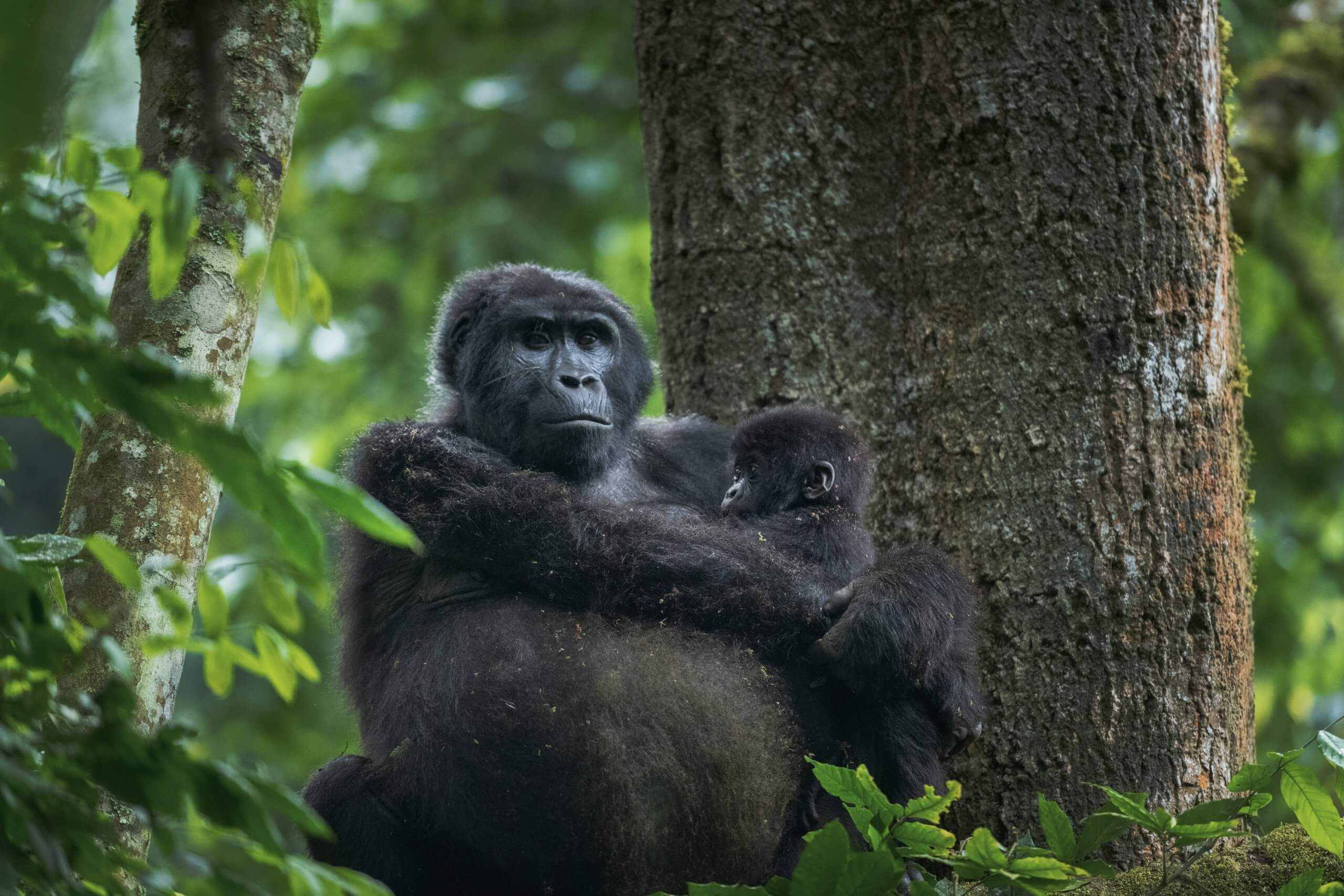
Then the tracker radios. They’ve found them. You push through one last patch of stinging nettles, duck under a fallen tree, and there they are. A silverback the size of a small car, casually pulling leaves off a branch. He looks at you for a second. Then he yawns. Then he goes back to eating. For the next hour, you just watch. A baby wrestles with its older sibling. A mom grooms her partner. The silverback lays down with a heavy thump. You forget about the mud, the money, the worry. You just stand there grinning.
Animals you will see beyond the gorillas
The gorillas are the main event, no question. But Rwanda has so much more wildlife. In the same Volcanoes National Park, you can trek to see golden monkeys. These little guys are like the hyper cousins of the gorillas. They have bright orange backs and tails longer than their bodies. They swing through the bamboo so fast you can barely keep up. And they are curious. One might jump onto a branch two feet from your face, stare at you, then flick a piece of leaf in your direction and bounce away. It is impossible not to smile.
If you have extra days, drive east to Akagera National Park. This place feels completely different. Rolling savannah, open lakes, acacia trees. You will see giraffes walking single file, zebras drinking at waterholes, and hippos snorting loud enough to wake the dead. Akagera is also one of the few places in Africa where you can still see the black rhino. Lions were brought back here several years ago, and they are thriving. A morning game drive might also show you elephants, leopards hiding in trees, and more birds than you can count. Rwanda has over 700 species, from the tiny sunbird to the prehistoric shoebill stork. Bring binoculars. You will need them.
Cultural experiences that will stick with you
The wildlife is incredible, but the people are unforgettable. Spend an afternoon at the Iby’Iwacu Cultural Village, just a short drive from the park. This place was started by former poachers and farmers who wanted a better life. Now they welcome visitors like old friends. You will learn how to grind sorghum on a stone, try to keep up with the royal dancers (spoiler: you won’t), and sip banana beer while listening to stories passed down for generations.
What touched me most was the honesty. One man showed me the snares he used to set for antelope. He looked embarrassed, but he didn’t look away. “That was before,” he said. “Now I track gorillas. I have a job. My daughter is in school.” He said it quietly, like a simple fact. But it hit me hard. Your permit fees make this possible. Another special stop is the Ellen DeGeneres Campus of the Dian Fossey Gorilla Fund. It is a beautiful, modern museum with interactive exhibits about Fossey’s life and work. You can even hike up to her original research center. The views are stunning, and the story of how she fought to save these gorillas will stay with you long after you leave.
Best time to visit for good weather and happy trails
Timing matters, but there is no bad time to see gorillas. The long dry season runs from June through September. This is the most popular time to visit, and for good reason. Trails are firm, skies are blue, and you won’t need to wring out your socks at the end of the day. The downside? More tourists. Permits sell out faster, and lodges charge higher rates. Book four to six months ahead if you want a dry season slot.
The short dry season from December to early February is my personal favorite. The rains have stopped, the landscape is still lush and green, and there are fewer visitors because many people assume it is still wet. The weather is crisp and cool in the mornings, perfect for hiking. You might see a few clouds roll in by afternoon, but nothing that ruins your day.
Now, let me say something that might surprise you. The rainy seasons (March to May and October to November) are not as bad as people think. Yes, you will get muddy. Yes, you should pack waterproof pants and a good poncho. But the forests explode in shades of green you didn’t know existed. The trails are quieter. Sometimes you will have the gorillas almost to yourself. And here is a secret: the gorillas don’t mind rain. They sit there just as calm, water dripping off their fur, babies huddled under their moms. You will get wet. You will laugh about it later. And you will have a story that very few other travelers can tell.
Accommodations for every budget and style
You do not need to be rich to do this trip. Luxury lodges exist, and they are stunning. Bisate Lodge sits inside a volcanic crater, with six villa rooms shaped like woven nests. Floor-to-ceiling windows look out over the peaks. You get a fireplace, a clawfoot tub, and food so good you will dream about it for months. It costs a lot, but for some people, it is worth every penny.
Mid-range options are easier on the wallet and still wonderful. Singita Lodge (not related to the famous brand) offers stone cottages with warm fireplaces and comfortable beds. After a long, muddy trek, coming back to a hot shower and a bowl of soup feels like heaven. Da Vinci Gorilla Lodge is another great choice. The rooms are simple but clean, the garden is pretty, and the staff treats you like family. Both lodges arrange your morning transfer to the park, so you do not have to worry about a thing.
If you are on a tight budget, look at guesthouses in Musanze town. They won’t win any design awards, but they are safe, warm, and friendly. You can get a private room for under fifty dollars a night. The best part? You will meet other travelers in the common area, swapping stories over a beer. One more tip: no matter where you stay, hire a porter at the trailhead. It costs about ten dollars, and that money feeds a family. Plus, they will save your knees on the way down.
So let’s come back to that question one more time. Are Rwanda Gorilla Permits Refundable If I Cancel? You know the answer now. No, not refundable. But rescheduling is usually possible. Insurance can protect you. And worst case, losing that money still means funding a cause that matters. Those gorillas have no idea about your canceled flight. They are just up there in the mist, eating thistles and raising their babies, alive because people like you buy permits.
Do not let fear steal this from you. Buy the permit. Get the insurance. Pack your boots. Go see the gorillas. You will not regret it.

Talk to us
- Email:
- Phone line:
- Whatsapp: