

How Do I Choose Between the Serengeti and Masai Mara for Migration?
How Do I Choose Between the Serengeti and Masai Mara for Migration?
Serengeti vs. Masai Mara: Which One Will Steal Your Heart?
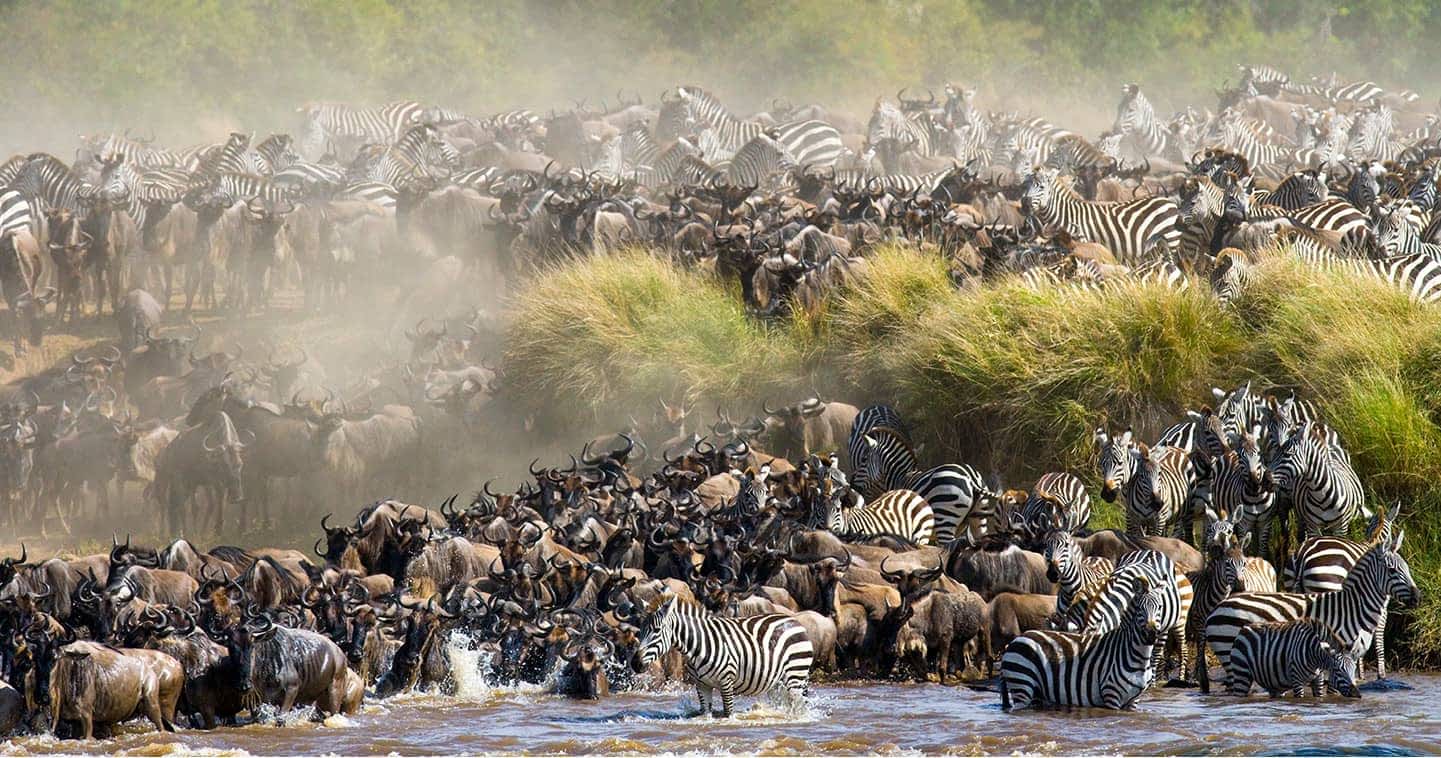
You’ve seen the photos. The thundering hooves. The dust clouds. The crocodiles snap as a million wildebeest throw themselves into a river. It’s the kind of thing that makes your chest tighten just watching it on a screen.
So now you’re finally planning to go see it for yourself. But then comes the question that stops every first-timer in their tracks:
“Wait… do I go to the Serengeti? Or the Masai Mara?”
I get it. It’s confusing. They sound like rival sports teams. Everyone has an opinion. But here’s the truth that took me years of traveling back and forth to figure out:
There is no bad choice. Only the right choice for you.
Let me walk you through it—no jargon, no sales pitch. Just the real talk you’d get from a friend who’s been there.
First, Let’s Clear Up a Huge Misunderstanding
Most people think the migration is like a train—it leaves Tanzania, arrives in Kenya, and that’s that.
The Serengeti and the Masai Mara are actually the same giant backyard. The animals don’t have passports. They just follow the rain like cows following a green pasture.
The herds rotate in a big, messy circle all year long:
-
January to March: They’re down in the southern Serengeti, having babies. Thousands of tiny wobbly-legged calves are born every single day. It’s absolutely adorable—and absolutely brutal, because the predators know exactly where to find the buffet.
-
April to June: They start moving north through the Serengeti. It’s a long, dusty road trip.
-
July to October: This is the big show. The herds hit the Mara River, split up, and hang out in both the northern Serengeti and the Masai Mara.
-
November to December: The rains call them back south, and the cycle starts over.
See? They’re always somewhere. You just have to be in the right spot at the right time.
Why You Might Fall Head Over Heels for the Serengeti
Imagine this: You’re sitting on a hill at sunset. There’s no one else around for miles. Just you, the endless golden plains, and a herd of wildebeest so huge it looks like the land itself is moving.
It’s huge. Like, ridiculously huge. 30,000 square kilometers of wild, untamed Africa. And because it’s so big, the migration stays here for most of the year.
Here’s why people choose it:
-
You’re not racing against the calendar. Traveling between January and June? The Serengeti is your only real option—and honestly, calving season is incredible. Watching a baby wildebeest take its first shaky steps while a lioness watches from the grass? That’s not just a safari. That’s life and death reality TV.
-
You hate crowds. The Masai Mara can get busy during peak season. Like, “twelve safari vans around one river crossing” busy. In the Serengeti, you can usually find a quiet corner and have the wilderness all to yourself.
-
You love variety. One minute you’re on open plains, the next you’re winding through river forests, and then suddenly you’re climbing rocky hills that look like something out of The Lion King. (Fun fact: Pride Rock is basically a Serengeti kopje.)
Why the Masai Mara Might Be Your Perfect Match
Now imagine this: You wake up before dawn, hop in a jeep, and within fifteen minutes you’re surrounded by thousands of wildebeest. Not in the distance. Right there. So close you can hear them grunting and snorting.
That’s the Masai Mara.
It’s smaller. More compact. Easier to get around. And during peak season (July to October), the wildlife density is absolutely insane.
Here’s why people fall for it:
-
You want the “wow” factor—fast. If you only have three or four days, the Mara delivers. You don’t have to drive for hours to find the herds; they’re everywhere. It’s like nature turned the volume up to eleven.
-
You want an easier trip. Flying into Nairobi and taking a short hop to the Mara is straightforward. No long connecting flights, no complicated bush transfers. If your vacation time is precious, this matters.
-
Your budget is tighter. The Mara has a wider range of accommodations, from simple tented camps to fancy lodges. You can make it work whether you’re splashing out or counting pennies.
The River Crossings: The Question Everyone Asks
Let’s talk about the elephant in the room—or rather, the crocodile in the river.
Everyone dreams of seeing the crossing. That heart-stopping moment when thousands of animals gather on the riverbank, panic sets in, and they just… go. Jumping into churning water filled with waiting crocodiles.
Here’s the thing nobody tells you:
The Mara River flows through BOTH the Serengeti and the Masai Mara.
You can see spectacular crossings on either side. In fact, some guides will quietly tell you they prefer the northern Serengeti side—because there are fewer vehicles, and you feel like you’re discovering something secret.
But please, please remember this: Crossings are completely unpredictable.
You might wait three days and see nothing. You might roll up at lunchtime and watch a thousand animals go for it. That’s the magic and the frustration of nature. No guide, no lodge, no “expert” can guarantee it. Anyone who promises you a crossing is selling you a dream they can’t deliver.
What About the Predators?
If you’re coming for the lions, cheetahs, and leopards, you’re in luck—both places are overflowing with them.
-
In the Serengeti, calving season is predator paradise. Imagine hundreds of vulnerable babies being born. The lions don’t even have to try hard—it’s an all-you-can-eat buffet. It’s raw, it’s brutal, and it’s utterly mesmerizing.
-
In the Masai Mara, the predators gather around the massive herds like groupies at a concert. Cheetah sightings are especially famous here. You might watch a mother teaching her cubs to hunt right in front of you.
Honestly? Flip a coin. You’ll see big cats in both.
Let’s Talk About the Crowds (Because No One Else Will)
The Masai Mara can get busy.
During peak season, a river crossing might have ten, fifteen, or even twenty vehicles lined up. Everyone’s jostling for the same photo. It doesn’t ruin the experience—I mean, you’re still watching one of nature’s greatest spectacles—but it’s not exactly the “untouched wilderness” vibe.
The Serengeti, on the other hand, is so vast that even when it’s “busy,” you can usually find your own little slice of solitude. If you’re the type who gets annoyed by crowds, this is a big deal.
The Boring (But Important) Stuff: Budget and Logistics
-
Getting there: The Mara is easier. Fly into Nairobi, take a quick flight, and you’re there. The Serengeti usually means flying into Kilimanjaro or Arusha, maybe staying overnight, and then taking another flight. It takes more time and costs more cash.
-
Staying there: The Mara has more variety. You can find budget options, mid-range camps, and ridiculously luxurious places. The Serengeti tends to be pricier overall—those remote camps aren’t cheap to run, and park fees add up.
If you’re on a tighter budget or shorter timeline, the Mara might be your friend. If you have two weeks and some savings to burn, the Serengeti is worth every penny.
The Photographer’s Dilemma
-
The Serengeti gives you drama. Wide-open skies. Epic sunsets. Golden light bouncing off endless plains. Your landscape shots will be postcard-perfect.
-
The Masai Mara gives you action. Animals are packed together. Predators hunting. Dust flying. If you want to fill your memory card with heart-stopping moments, the Mara during peak season is hard to beat.
Honestly, you can’t go wrong. Just bring extra batteries. You’ll burn through them.
The Ultimate Question: Can You Do Both?
If you have the time (think 10–14 days) and the budget, a combined safari is the holy grail. Start in the Serengeti for the calving, follow the herds north, and cross into the Masai Mara for the river crossings. You get the best of both worlds and a story that’ll make your friends back home wildly jealous.
It’s expensive. It’s logistically trickier. But for a once-in-a-lifetime trip? Worth it.
So… Which One Should YOU Pick?
Pick the Serengeti if:
-
You’re traveling between January and June.
-
You hate crowds and want wide-open spaces.
-
You have more than a week to explore.
-
You want a wilder, more remote feel.
Pick the Masai Mara if:
-
You’re traveling between July and October.
-
You only have 3–5 days.
-
You want to see massive herds packed into a smaller area.
-
You prefer easier logistics and more budget options.
The migration is bigger than borders. Bigger than national parks. It’s a rhythm that’s been playing for millions of years, and whether you watch it from a jeep in Kenya or a camp chair in Tanzania, you’re going to feel something shift inside you.
I’ve been to both. I love both. And I’d go back to either in a heartbeat.
So stop overthinking. Pick the one that fits your trip, pack your bags, and go get dusty. The wildebeest are waiting.

Talk to us
- Email:
- Phone line:
- Whatsapp: