

How Long Does the Great Migration Last in the Serengeti?
How Long Does the Great Migration Last in the Serengeti?
Let’s Talk About the Great Migration
When I first started researching the Great Migration, I nearly gave up. Every website said something different. One told me July was the best. Another swore by February. A third one said, “It depends on the rain,” which, like… thanks. Super helpful.
So let me save you the frustration and tell you what I wish someone had told me from the start.
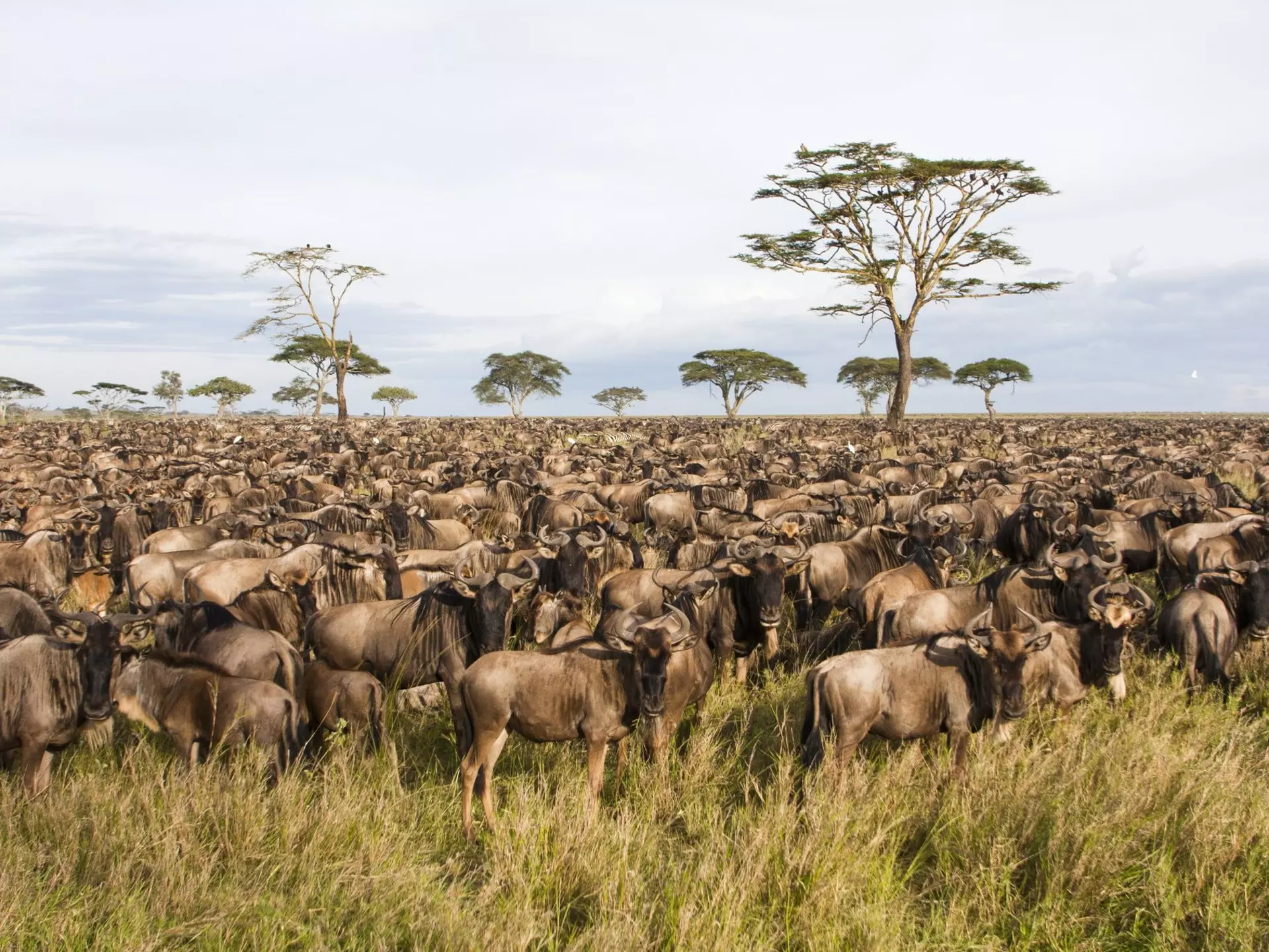
The Great Migration doesn’t have a start date. It doesn’t have an end date. It’s not a single event. It’s basically a million-and-a-half wildebeest, a bunch of zebras who think they’re in charge, and some gazelles just trying to keep up—all of them wandering around Tanzania and Kenya like a giant, hairy, hooved caravan that never checks out of the hotel.
They’re just… always moving. Always looking for grass. Always following the rain like it’s the world’s slowest, most dramatic treasure hunt.
And here’s the thing that blew my mind: you can see some part of this migration in the Serengeti for like, ten or eleven months out of the year. Seriously. The trick isn’t finding the right month. It’s finding the right spot.
So let’s break it down. Not like a guidebook. Like a friend who’s been there, made mistakes, and wants you to have a better time than I did figuring it all out.
January to March: Baby Animals Everywhere (And I Mean Everywhere)
Where they are: Southern Serengeti, around Ndutu
What it feels like: A wildlife documentary directed by Disney, but with way more lions
Okay, so. If you come during this time, prepare yourself. Emotionally.
Around late January, something incredible happens. The wildebeest drop their calves. And not like, a few here and there. We’re talking half a million babies in a matter of weeks.
You’ll see a calf take its first wobbly steps, and I swear to you, your heart will melt into a puddle. They’re all gangly legs and confused little faces. It’s adorable.
But here’s the thing: the predators know this, too.
You’ll watch a cheetah stalk a baby. You’ll see a lioness go for the weakest one. And it’s brutal, man. It’s nature at its most raw. I’m not gonna lie—I teared up more than once. But that’s what makes it real. You’re not watching a sanitized nature show. You’re watching life and death play out in front of you.
And honestly? That’s why you came, right? For something that actually feels like Africa.
April to May: The Great, Muddy Exodus
Where they are: Moving from central Serengeti, heading west
What it feels like: Epic, quiet, and you’ll need good rain boots
By April, the grass down south is done. Chewed to nothing. So the herds pack up and move. And when I say move, I mean move.
This is when you see those incredible lines of animals stretching across the horizon. Thousands of them, walking single file like they’re in some kind of massive, slow-motion conga line. It’s honestly one of the most visually stunning parts of the whole thing.
Now, fair warning—April and May are rainy. Like, muddy, your safari vehicle might get stuck rainy. But you know what that means? Fewer tourists. Lower prices. And the landscape? Ridiculously green. Like, postcard-perfect green.
If you’re the kind of person who doesn’t mind a little mud for a lot of peace, this might be your time.
June to July: The Grumeti River—First Big Scare
Where they are: Western Serengeti, Grumeti River
What it feels like: Tense. Like, heart-in-your-throat tense.
Now the herds have made it to the Grumeti River. And this is their first real test.
Picture this: thousands of wildebeest gathered on the riverbank. They can smell the water. They can see the other side. They know they need to cross. But they also know what’s waiting in that water.
Crocodiles.
And not small ones. We’re talking prehistoric monsters that have been doing this for decades. They know exactly when the herds show up. They’re patient. They’re hungry.
The wildebeest pace back and forth. Some get brave, start to go in, then turn around. This can go on for hours—sometimes days.
And then, out of nowhere, one animal just… goes for it. And the rest follow in a massive, chaotic stampede. It’s loud. It’s messy. It’s terrifying. And you can’t look away.
July to October: The Mara River—This Is the One You’ve Heard About
Where they are: Northern Serengeti, Mara River
What it feels like: The Super Bowl. The Olympics. Absolute insanity.
Okay, this is the one. This is the part that ends up on every nature documentary. The Mara River crossings.
If you’ve seen footage of wildebeest hurling themselves into churning water while crocodiles snap at them—yeah. That’s this.
Thousands of them bottle up on the riverbanks. They’re nervous. They’re pushing. The whole scene is like a crowded concert where everyone’s trying to get to the front row. And then, suddenly, they just explode into the water.
Hooves everywhere. Bodies tumbling. Crocodiles lunging. It’s pure chaos.
But here’s the thing—and this is important—the crossings are completely unpredictable.
You might sit there for eight hours and watch nothing. Or you might see three crossings in one morning. The animals don’t check a schedule. They don’t care that you flew across the world to see them.
And honestly? That’s what makes it so special. You earn it. When you finally see that crossing, you’ve waited for it. You’ve been patient. And the payoff is unlike anything else.
November to December: The Long Walk Home
Where they are: Heading back south through eastern Serengeti
What it feels like: Quiet, green, and underrated
The short rains have started down south again, and the herds turn around. They’re going home.
This part of the journey gets way less attention than the river crossings, and honestly? I think that’s a shame. The herds are spread out across these gorgeous green plains. The lodges are quieter. The whole vibe is more relaxed.
If you want to see the migration without the crowds, this is your window.
Does It Ever Actually End?
Nope. And that’s the whole point.
There’s no finish line. No final destination. The migration isn’t a race—it’s a circle. A loop that just keeps spinning.
Even when some of the animals cross into Kenya’s Maasai Mara, huge numbers stay in Tanzania. So you don’t even have to leave the country to see it.
You can catch the migration in the Serengeti for pretty much ten to eleven months of the year. The real challenge? Picking the right region at the right time.
Wait, So What’s the Longest Part of the Migration?
Here’s something that surprised me: the river crossings everyone obsesses over? They’re actually the shortest part.
The longest stage is just… grazing. Walking. Eating. Moving when the grass runs out.
The herds hang out in the southern plains for months. They spend months in the north. The crossings are just dramatic little bursts of action in between all that wandering.
So if you come expecting constant chaos, you might be disappointed. But if you come expecting to watch an ancient, slow-moving rhythm of survival? You’ll be mesmerized.
Okay, But When Should I Actually Go?
This is the question everyone asks me. And here’s my honest answer: it depends on what kind of magic you’re looking for.
-
You want babies and predator action? Come January through March. Bring tissues.
-
You want massive moving herds and fewer people? April through June is your jam. Just pack a raincoat.
-
You want those dramatic river crossings? July through October. But bring patience—lots of it.
-
You want green landscapes and peace? November and December. Seriously underrated.
There’s no wrong time. Every month has something special. Every month has its own story.
From Someone Who’s Been There
Look, I know planning a safari feels overwhelming. There’s so much information out there. So many opinions. So many “expert” guides telling you you’ll miss everything if you don’t book the exact right week.
Ignore all that noise.
The truth is, the Great Migration is messy. It’s unpredictable. It doesn’t care about your itinerary.
And that’s exactly what makes it magic.
You’re not going to Africa to check boxes. You’re going to feel something—to watch one of the last great wildlife spectacles on Earth play out in real time.
So take a breath. Pick a time that works for you. Trust your local guide—they know these animals better than any blog post ever could. And just… let the Serengeti do its thing.
It will blow your mind. I promise.

Talk to us
- Email:
- Phone line:
- Whatsapp: