

How Many People Go in a Gorilla Trekking Group?
How Many People Go in a Gorilla Trekking Group?
If you’re dreaming about a gorilla trek, I bet one of the first questions bouncing around your head is how many people go in a gorilla trekking group? I know it was for me before I went. Turns out, the answer is simple: no more than eight. That’s the hard rule everywhere—Uganda, Rwanda, the DRC. Eight people per gorilla family, per day. It’s not random. It keeps the gorillas healthy and makes sure your hour with them feels less like a tourist line and more like a private moment in someone else’s living room.
What to expect
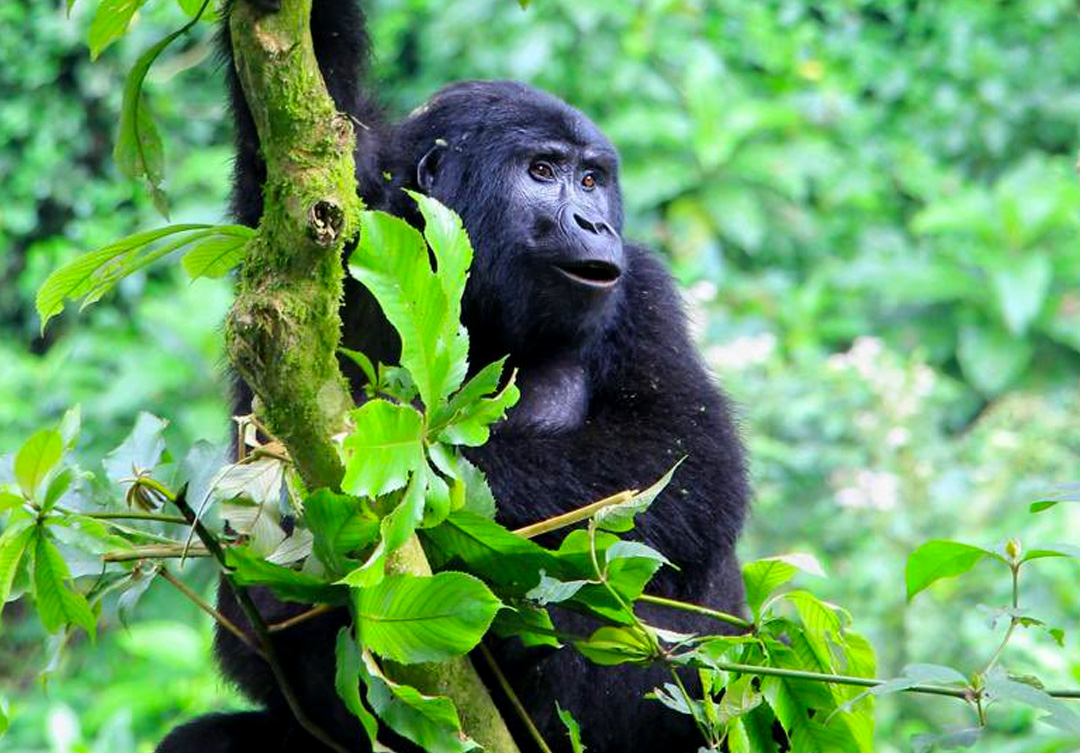
Your alarm goes off at 4:00 AM. You stumble into boots and grab a packed banana. By sunrise, you’re at the park headquarters, surrounded by a handful of other sleepy, excited humans. That’s your group—maybe six, maybe the full eight. A guide splits you up, and suddenly you’re walking single file into the thickest green you’ve ever seen. The trail might be an hour. It might be five. You’ll slip in the mud. You’ll grab vines to pull yourself up hills. And then, without any dramatic announcement, the trackers stop. They whisper, “They’re right there.” And you see a massive silverback sitting ten feet away, casually eating a thistle like you’re just part of the furniture.
Animals you’ll actually see
Obviously, the gorillas are the main event. But the forest puts on a whole show around you. Golden monkeys explode through the bamboo like little fireworks—bright orange backs against green leaves. I watched a troop of them chase each other for ten straight minutes. You’ll hear the crack of branches and look up to see a black-and-white colobus monkey flying between trees. Forest buffalo leave piles of dung on the trail, though they’re smart enough to stay hidden. And if you keep your eyes low, you might spot a three-horned chameleon inching across a root, moving as if it has nowhere to be. But here’s the truth: once you lock eyes with a baby gorilla swinging upside down from a vine, you won’t care about anything else.
Cultural experiences that stick with you
After the trek, do yourself a favor and visit a local village. I spent an afternoon with the Batwa people near Bwindi. They lived inside that forest for centuries before it became a national park. An old woman showed me how to grind seeds on a rock. A group of men built a fire in about eight seconds using just a stick and some dry grass. Then they sang—this deep, rhythmic song that made my chest vibrate. No stage, no lights, just voices echoing off the hills. You buy a carved necklace, but really, you’re helping pay for their kids’ school supplies. One man told me, “We don’t hunt the gorillas anymore. They’re our cousins now.” I still think about that line.
Best time to visit
Dry seasons are June–September and December–February. Trails are firmer, views are clearer, and you won’t be wringing out your socks every night. I went in August, and my boots stayed mostly mud-free. That said, a friend went in April (rainy season) and loved it more. Why? Fewer people. Remember that question—how many people go in a gorilla trekking group? It’s still eight maximum, but in the wet months, groups are often half that because fewer tourists book. She had just three other trekkers. Rain means slippery roots and leeches, sure. But it also means the forest is exploding with life—waterfalls everywhere, orchids blooming, and gorillas huddled under trees looking like giant furry philosophers. Just pack a good rain jacket.
Where you’ll sleep
You don’t have to rough it unless you want to. Budget options are real and honest: basic bandas with a bed, a mosquito net, and a bucket of hot water for a shower. It’s fine. You’ll be so tired you could sleep on a rock. Mid-range lodges are where I usually land—wooden cabins with a porch, a fireplace, and meals served family-style with other trekkers. You’ll trade stories over stew and chapati. If you want to splurge, go all the way. Some luxury places have glass walls overlooking the misty forest, private decks with plunge pools, and staff who remember exactly how you take your coffee. One lodge in Rwanda brings you a hot water bottle at turndown. Another in Uganda has a spa where you can get a leg massage after the trek, and I promise you, there is no better feeling in the world.
it’s easy to get lost in logistics—permits, packing lists, that question about how many people go in a gorilla trekking group? But when you’re kneeling in the mud, watching a 400-pound silverback nap six feet away, you won’t care about numbers. You’ll just feel incredibly lucky to be one of the few.

Talk to us
- Email:
- Phone line:
- Whatsapp: