

What Animals Other Than Wildebeest Join the Great Migration?
What Animals Other Than Wildebeest Join the Great Migration?
It’s Not Just About the Wildebeest: Meet the Rest of the Migration Crew
Let’s be honest for a second.
When you think of the Great Migration, you picture them. The wildebeest. Millions of them, kicking up dust until the sky turns brown, plunging into crocodile-infested rivers like they’ve lost their minds. And sure, they’re the headliners. They get the movie deals, the documentaries, the dramatic music.
But here’s what nobody tells you: the wildebeest are just the opening act.
If you only watch them, you’re missing about 80% of the magic. Because the Great Migration isn’t really a wildebeest migration at all. It’s a full-blown, chaotic, breathtaking ecosystem on wheels—a moving city of hungry mouths, sharp teeth, watchful eyes, and scavengers who show up for the leftovers.
So, let’s zoom out. Let’s meet the real cast of characters who make this journey the greatest show on Earth.
Zebras: The Sassy Best Friends
If wildebeest are the anxious lead singers of the band, zebras are the cool, striped backup dancers who keep things from falling apart.
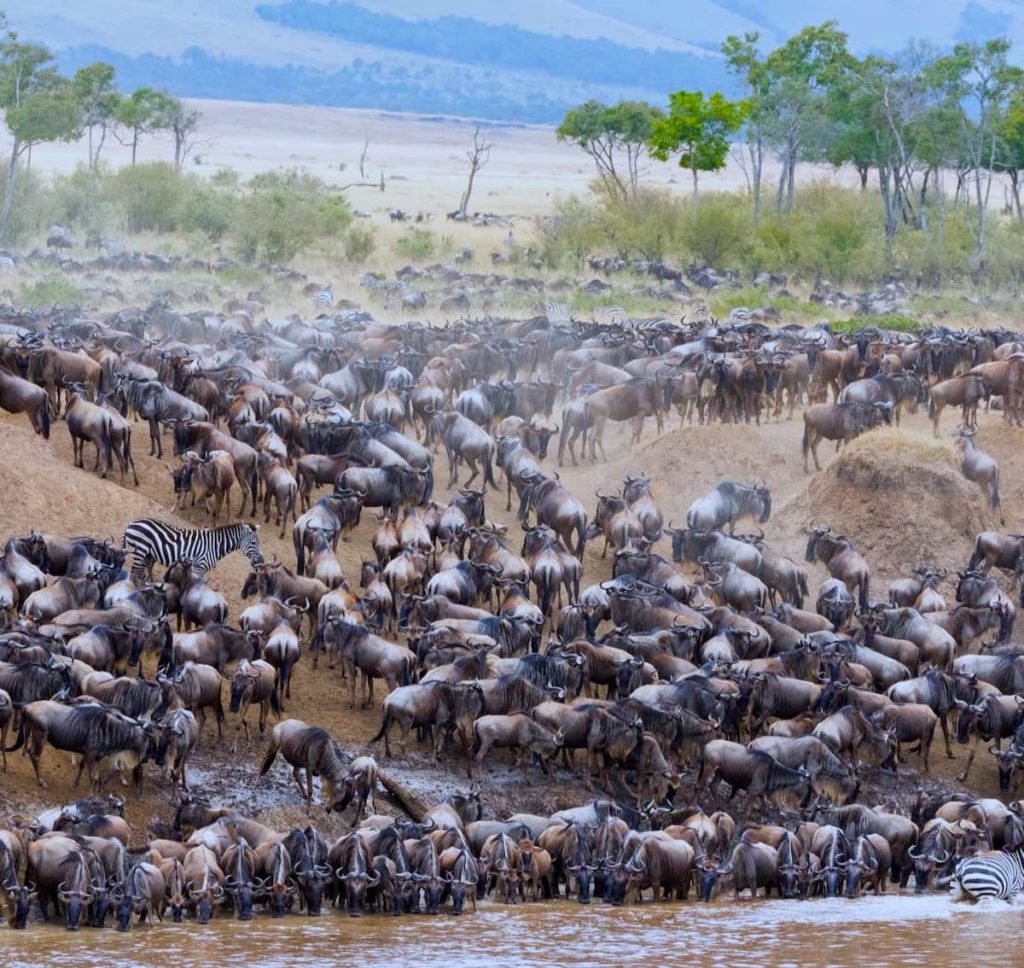
About 200,000 to 300,000 of them tag along, and honestly? The wildebeest would be lost without them. Here’s the thing: zebras aren’t picky. They’ve got strong teeth and tough stomachs, so they chow down on the tall, coarse grass that wildebeest can’t stomach. Once the zebras have mowed the lawn, the tender, juicy shoots pop up—and that’s when the wildebeest move in for their gourmet meal.
It’s not just about food, though. Zebras are basically the herd’s security guards. They’ve got eagle eyes and radar-like ears. Wildebeest? They’ve got the nose. Together, they’ve got all five senses covered. It’s a beautiful, unlikely friendship that plays out across thousands of kilometers of African bush.
And when they hit the rivers together? The sight of black-and-white stripes swirling through a sea of dark wildebeest bodies is so stunning it almost makes you forget the crocodiles are waiting.
Thomson’s Gazelles: The Tiny Daredevils
Now, picture this: a gazelle no bigger than a large dog, bouncing across the plains like it’s on springs. That’s a Thomson’s gazelle for you.
There are roughly 400,000 of these little speedsters in the ecosystem, and while they don’t march in straight lines like the wildebeest, they absolutely move with the seasons. They’re the foodies of the herd—picky eaters who wait until the big grazers have trampled through, because that’s when the freshest, sweetest shoots appear.
But my favorite thing about them? The stotting.
When a cheetah locks eyes with one, the gazelle doesn’t just run. It springs. Straight up, stiff legs, bouncing like a cartoon character. It’s basically saying, “Look how fit I am, mate. You’re wasting your energy.” And sometimes—just sometimes—the cheetah actually gives up. Pure attitude. I love it.
The Gentle Giants Nobody Talks About: Elands
Okay, imagine a creature the size of a pickup truck… that can jump over a fence like it’s nothing.
That’s the eland. Africa’s biggest antelope. They don’t join the migration huddle in massive numbers, but they drift along the same routes, following the rain like everyone else. They’re quiet, graceful, and hugely underrated.
If you’re lucky enough to spot one on safari, don’t rush past it. Watch how something so huge can move so gently across the land. It’s humbling.
The Supporting Squad: Topis, Hartebeests & Grant’s Gazelles
And then there’s everyone else.
Topis, sleek and lightning-fast, weave through the grasslands. Hartebeests, with their strange, sloping backs, tracking the rain like weather forecasters with hooves. Grant’s gazelles, who are tough enough to survive in drier spots when the others have to move on.
They’re not the headliners, no. But they fill in the gaps. They keep the ecosystem balanced. Without them, the Serengeti would be a much emptier, lonelier place.
Now, Let’s Talk About the Bad Guys…
Because where there’s a buffet of millions, the predators are never far away. And honestly? This is where the drama really kicks off.
Lions stake their claims along the migration routes like medieval lords. They don’t follow the herd aimlessly; they wait. They know exactly where the rivers are, where the calving grounds are, and they park themselves there like ambush artists. The migration brings dinner right to their doorsteps.
Cheetahs—my personal favorites—turn the open plains into racetracks. During calving season, when wildebeest babies are wobbling on new legs, the cheetahs are in heaven. They’re not strong enough to take down an adult, but a newborn calf? That’s fair game. It’s brutal, but it’s nature.
And hyenas? Oh, don’t believe the hype. They’re not just cowardly scavengers. They’re ruthless, organized hunters that take down zebras and wildebeest with surgical precision. They laugh, yes. But they’re laughing at you, not with you.
The River Horrors: Crocodiles
If there’s one part of the migration that makes my heart pound, it’s the river crossings.
Imagine this: you’re standing on the banks of the Mara River. The water is brown, murky, and deceptively still. Below the surface, massive Nile crocodiles—some as long as a small car—have been fasting for months. They’re patient. They’re hungry.
And then the wildebeest start pouring in.
It’s chaos. Dust, noise, panic, water exploding everywhere. The crocs strike like torpedoes. Bodies thrash. Some animals make it across; others don’t. It’s terrifying. It’s heartbreaking. It’s impossible to look away.
You don’t watch that scene and feel neutral. You feel alive.
Vultures & Marabou Storks
And after the chaos settles, after the lions have had their fill and the crocs have slipped back underwater… the vultures arrive.
They spiral down from nowhere—white-backed, Rüppell’s, lappet-faced—like feathered FBI agents arriving at a crime scene. Within minutes, a carcass that was a zebra just hours ago is stripped clean.
Alongside them, the weird, gangly marabou storks waddle in like undertakers in black cloaks.
It’s not glamorous work. But without them? The disease would spread. The plains would stink. They’re nature’s unsung heroes, and they deserve a round of applause.
The Truth? It’s All Connected.
Here’s what I want you to remember.
When you visit the Serengeti—and I truly hope you do—don’t just stare at the wildebeest.
Look at the zebra foal sticking close to its mother. Watch the gazelle bouncing in defiance. Hold your breath when the lioness stalks through the golden grass. Gasp when the crocodile explodes from the water.
Because the Great Migration isn’t one species traveling from A to B.
It’s millions of lives colliding, competing, depending on each other, and surviving together.
It’s messy. It’s raw. It’s emotional.
And once you see it with those eyes—not just a tourist ticking a box, but a human being witnessing something ancient and wild—you’ll never be the same.

Talk to us
- Email:
- Phone line:
- Whatsapp: