

What Is the Calving Season in the Serengeti?
What Is the Calving Season in the Serengeti?
The Serengeti Calving Season: Nature’s Most Intense Baby Shower
Let me paint you a picture.
Imagine standing in the middle of an endless sea of green grass. The sky is huge, dotted with fluffy clouds that look close enough to touch. And as far as your eyes can see—literally to the horizon—there are wildebeest. Thousands of them. Maybe hundreds of thousands.
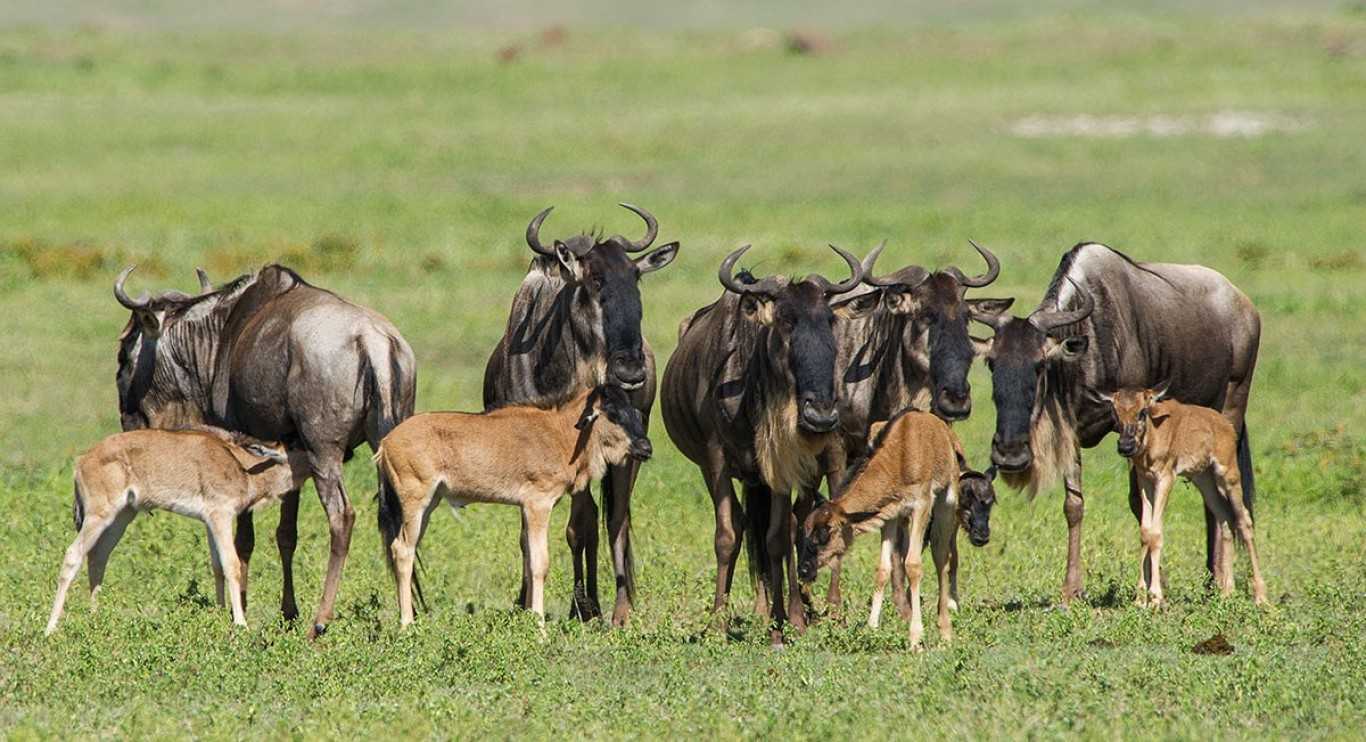
And scattered among them? Newborn calves. Wobbly-legged, wide-eyed, impossibly tiny creatures taking their very first steps on African soil.
This isn’t a dream. This is the Serengeti calving season. And honestly? It might just be the most beautiful, terrifying, and exhilarating thing you’ll ever witness.
So, When Does This Magic Actually Happen?
If you want to catch the action, you need to be there between late January and early March. But if I had to give you one single date to circle on your calendar? February. Always February.
That’s when the plains absolutely explode with new life.
The timing isn’t random—it’s genius, really. The herds have spent November and December munching their way south, following the rains to the southern Serengeti. By the time they arrive, the grass is packed with all the good stuff pregnant mamas need. And then, like clockwork, nature hits the big red button.
Within just a few weeks, nearly 500,000 calves are born. On some days, you might see 8,000 births in a single 24-hour period.
Let that sink in for a moment.
Eight thousand. In one day.
It’s chaos. It’s beautiful. And it’s all happening right in front of you.
Why Do They All Give Birth at the Same Time?
Here’s where it gets really clever.
Wildebeest aren’t just dropping babies randomly. They’re doing it on purpose—all at once, in one massive, coordinated wave.
Why?
Because predators exist. Lions, cheetahs, hyenas—they’re always watching, always hungry. But if you’re a wildebeest mother, you know something they don’t: there are only so many bellies to fill.
When half a million calves are born within weeks, predators can only eat so many. It’s the ultimate numbers game. Sure, some will be taken. But the vast majority? They’ll survive. They’ll grow. And they’ll keep the greatest migration on Earth going for another year.
It’s brutal. But it’s also breathtakingly smart.
Predators Are Everywhere—And It’s Absolutely Thrilling
Let’s be real for a second.
The calving season isn’t all sunshine and lullabies. It’s also prime hunting time. And if you’re lucky enough to be there, you’ll see nature at its most raw and real.
Lions patrol the edges of the herds like furry, gold-eyed gangsters. Cheetahs—those sleek, tear-streaked speed demons—target the tiniest calves that stray too far from mom. Hyenas laugh their nervous giggles and work in teams to cause panic and confusion.
You’ll hold your breath. You’ll clutch your camera. Your heart will race.
And then, just when you think it’s all too intense, you’ll watch a mother wildebeest charge a full-grown lion to protect her baby. And suddenly, you’re crying.
I’m not joking. It happens. Every. Single. Time.
Newborn Calves: The Real Superheroes of the Savanna
Here’s something that will blow your mind.
A wildebeest calf doesn’t get a “newborn phase.” No lying around, no sleepy snuggles. Within five minutes of being born, that little guy is trying to stand. Within an hour, it’s walking. A few hours later? It’s running alongside the herd.
Think about that. A human baby takes a year to walk. These creatures are sprinting before they’re even a day old.
Why so fast? Because standing still on the Serengeti plains is basically a death sentence. Speed is survival. And instinct? It kicks in immediately.
Mothers and calves bond in seconds. They recognize each other’s scent, their unique grunts, and their posture. In a crowd of thousands, they find each other again and again. It’s deeply moving to watch.
It’s Not Just About the Wildebeest
While the wildebeest steal the show, they’re not alone.
Zebras are everywhere, too—those striped, noisy troublemakers who always seem to be arguing about something. They’re actually the ones who arrive first, munching down the tall, tough grass so the wildebeest can get to the tender, nutritious stuff underneath.
You’ll also spot Thomson’s gazelles darting around like nervous little ballerinas. And the birdlife? Vultures circle lazily overhead. Secretary birds stomp through the grass. Eagles scan from acacia trees.
The whole ecosystem comes alive. It’s not just a safari—it’s a front-row seat to the circle of life in high definition.
Where Exactly Should You Go?
If you want the best view in the house, head to the Ndutu area in the southern Serengeti.
This is the epicenter. The heart of the action. It’s where the plains open up wide, where the grass is greenest, and where the herds gather in staggering numbers.
Ndutu sits right on the edge of the Ngorongoro Conservation Area, and it’s famous for its seasonal lakes and endless horizons. Mobile camps pop up here every year just to follow the herds. And trust me—waking up to the sound of a million hooves rumbling in the distance is something you’ll never forget.
Calving Season vs. River Crossings: Which One Wins?
People always ask me: “Should I go for the calving season or the river crossings?”
Here’s the honest answer: it depends on what moves you.
The river crossings (July to October) are dramatic, chaotic, and terrifying. Crocodiles, raging water, panic, dust—it’s pure adrenaline.
But the calving season? That’s different. It’s softer. More emotional. You’re watching life begin, not just watching it struggle. You’ll see tenderness. You’ll see fierce protection. You’ll laugh at clumsy babies. You’ll gasp at near-misses.
And the landscape? Oh, it’s stunning. The green season turns the Serengeti into a lush, vibrant paradise. It’s not the dry, dusty savannah you see in postcards. It’s alive. Pulsing. Emerald and gold under dramatic stormy skies.
Most people who’ve experienced both will tell you—the calving season stays with you longer. It gets under your skin.
A Few Practical Tips (Because You’re Actually Going, Right?)
If this has convinced you to book that flight, here’s what you need to know:
-
Book early. Like, really early. Camps in the Ndutu area fill up months in advance, especially in February.
-
Plan for at least 3–4 days in the southern Serengeti. Give yourself time to really soak it in.
-
Pack layers. Mornings are chilly (think jackets and beanies), afternoons are warm (t-shirts and sunscreen), and it might rain. Short, dramatic showers that make everything smell incredible.
-
Combine it with Ngorongoro Crater if you have time. It’s one of the best places in Africa to see the Big Five, and it’s right next door.
-
Bring a good camera. You don’t need to be a pro, but you’ll want to capture these moments. The light is magic. The action is non-stop.
Why I’ll Never Stop Recommending This Experience
Look, I’ve seen a lot of wildlife. I’ve watched lions stalk zebras in the golden hour. I’ve floated over the Okavango in a mokoro. I’ve tracked gorillas through misty jungles.
But the Serengeti calving season? It hits different.
There’s something about standing on those plains, surrounded by thousands of mothers and their newborns, that makes you feel small in the best way possible. You’re witnessing something ancient. Something that’s been happening for thousands of years. Something that reminds you just how wild, beautiful, and relentless this world really is.
You’ll laugh. You’ll cry. You’ll take a thousand photos that will never quite capture the feeling. And you’ll come home completely, utterly changed.
So, what do you think? Is February calling your name?
If you’re ready to experience the Serengeti like never before, check out our Tanzania safari packages. We’ll get you there. We’ll show you around. And we’ll make sure you get the absolute best seat in the house.
Have questions? Drop them below—I’d love to help you plan your adventure.

Talk to us
- Email:
- Phone line:
- Whatsapp: