

What Languages Do Gorilla Trekking Guides Speak?
What Languages Do Gorilla Trekking Guides Speak?
I didn’t think about languages before I left. Not really. I packed my boots, my bug spray, and my nerves. But then I met my guide, a guy named Jean who laughed at my fancy rain jacket and said, “You look like a lost tourist.” He wasn’t being mean. Just honest. And that’s when it hit me—what languages do gorilla trekking guides speak? Because Jean spoke English just fine, but he also spoke something else. Something calmer. Like he’d done this a thousand times and still loved it.
What to Expect
Look, I’ll be straight with you. It’s hard. You’ll walk up hills that feel like walls. You’ll slip in mud that stains your clothes forever. My legs were shaking after two hours, and I consider myself pretty fit. But here’s the thing—your guide won’t let you give up. They’ll point out a weird plant. They’ll tell you a stupid joke. They’ll say, “Just ten more minutes,” even when it’s probably twenty. And somehow, that works. Most guides speak English and French because of the tourists, but they also speak Kinyarwanda or Luganda among themselves. So when you ask what languages do gorilla trekking guides speak, the real answer is: they speak whatever gets you up that mountain. And they’re really good at it.
A gorilla trekking guide speaking with a tourist in a misty jungle.
Animals to See
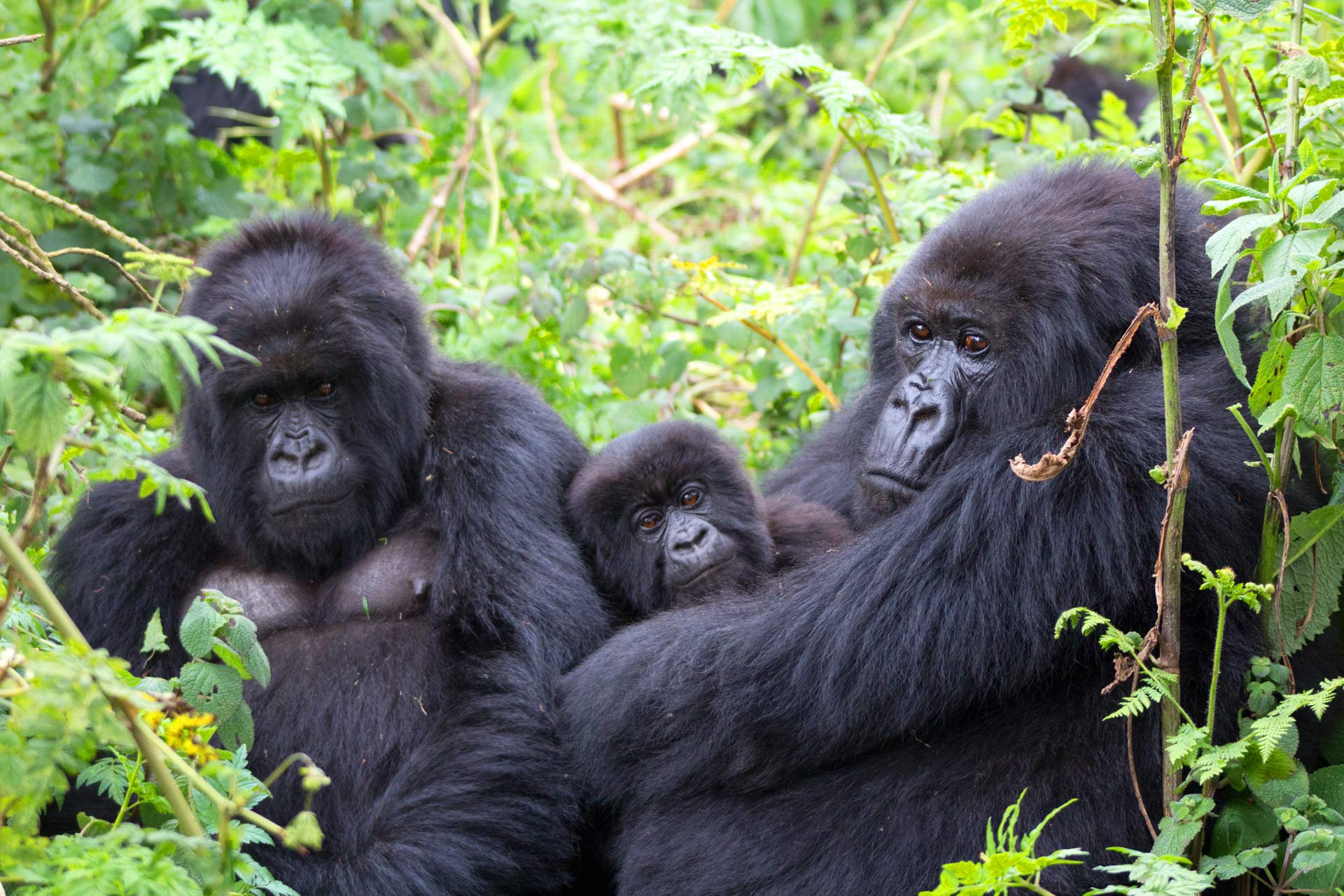
The gorillas are the main event. Everyone knows that. You sit there in the mud, and this huge silverback looks at you like you’re the weird one. Babies roll around like furry soccer balls. Mothers just stare at you, unimpressed. But don’t ignore the rest. Golden monkeys flew past us so fast I almost dropped my camera. Some big bird with a red chest landed right above my head. My guide whispered, “That’s a Rwenzori turaco. Very rare.” I nodded like I knew what that meant. Later, we saw fresh elephant footprints the size of dinner plates. Your guide sees everything. They’ll stop and point and name things you’d walk right past. That’s why understanding what languages do gorilla trekking guides speak matters—not for grammar, but because they translate the whole forest for you. Every sound. Every smell. Everything.
Cultural Experiences
After the trek, we drove maybe twenty minutes to a small village. A woman named Grace welcomed us into her home. Mud floor. No running water. But she smiled bigger than anyone I’ve ever met. She showed us how she weaves baskets from the grass she collects herself. Her kids sang a song about the gorillas—something about not being afraid. I didn’t understand the words, but I didn’t need to. Later, an old man told us that his grandfather used to see gorillas near the village all the time. “They’re not enemies,” he said. “They’re neighbors.” That stuck with me. And honestly, that’s when I finally understood what languages do gorilla trekking guides speak. They speak the in-between. The stuff you can’t learn from a book. They connect you to people like Grace, people who’ve lived next to these animals their whole lives.
Best Time to Visit
I went in February because someone online said it was “dry.” Let me tell you—dry is a relative word in a rainforest. It still rained. Just less. The guides all said the best months are June to September and December to February. Trails are easier. Less slipping. But I met a couple who went in April, the rainy season, and they said it was actually better. Fewer people. Greener views. And the gorillas don’t cancel plans because of the weather. So really, there’s no perfect time. Just pick a month, book your permit, and accept that you’ll get wet. Your guide will be there either way. And they’ll still make fun of your raincoat.
Accommodations
I stayed at a cheap lodge near the park entrance. Basic room. Hot shower that sometimes worked. But the porch faced the forest, and at night, you could hear things moving out there. Not scary exactly. Just… wild. If you have money, places like Bisate Lodge in Rwanda look like something from a movie—huge windows, fancy meals, the whole thing. And if you’re really broke, homestays are awesome. You sleep in someone’s spare room and eat dinner with their family. I almost did that, and I kind of wish I had. Every place has one thing in common though: your guide shows up early, knocks on your door, and asks if you’re ready. And if you still want to know what languages do gorilla trekking guides speak, just listen to them that morning. They speak “let’s go.” They speak “you can do this.” And yeah, a little bit of English too.

Talk to us
- Email:
- Phone line:
- Whatsapp: